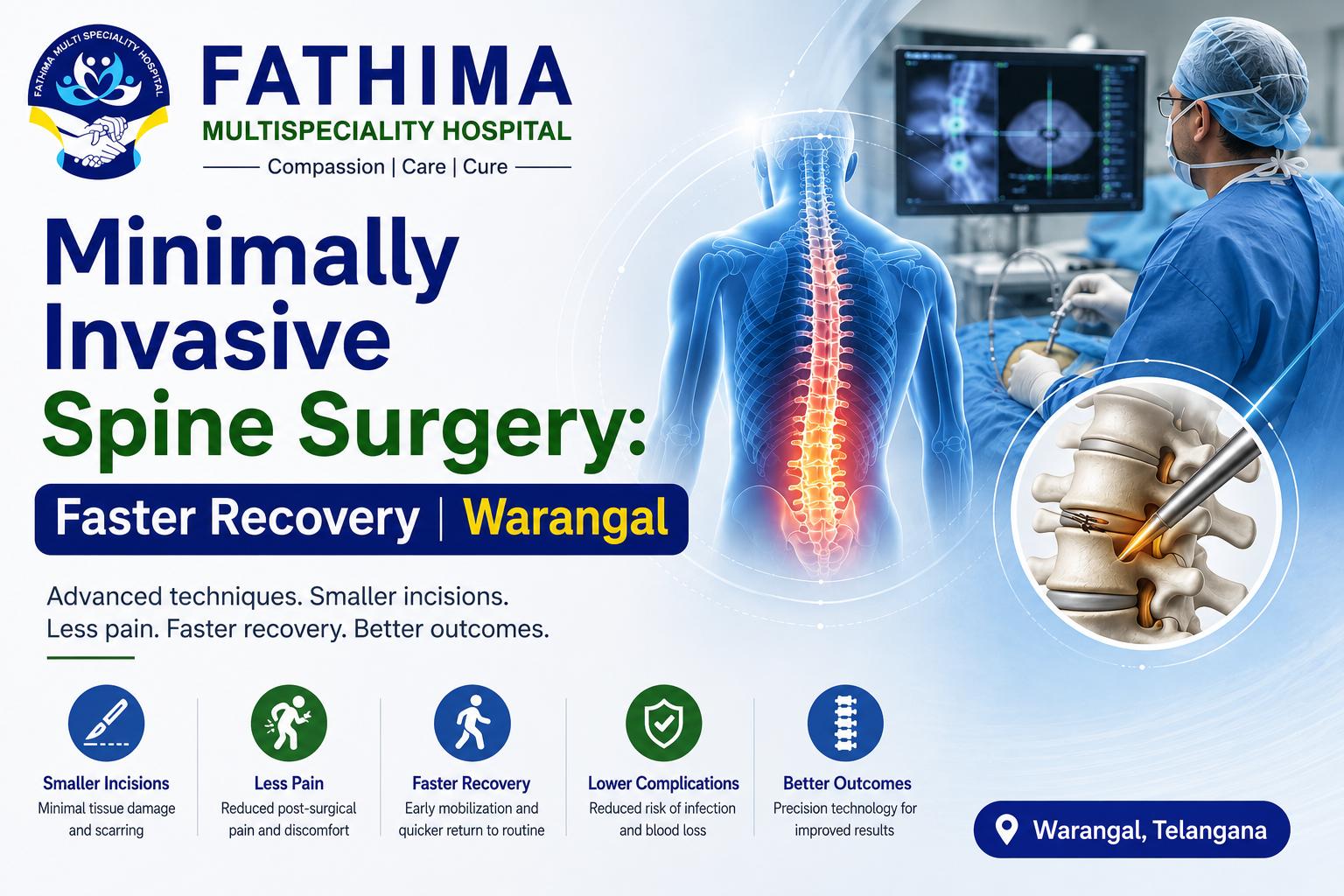

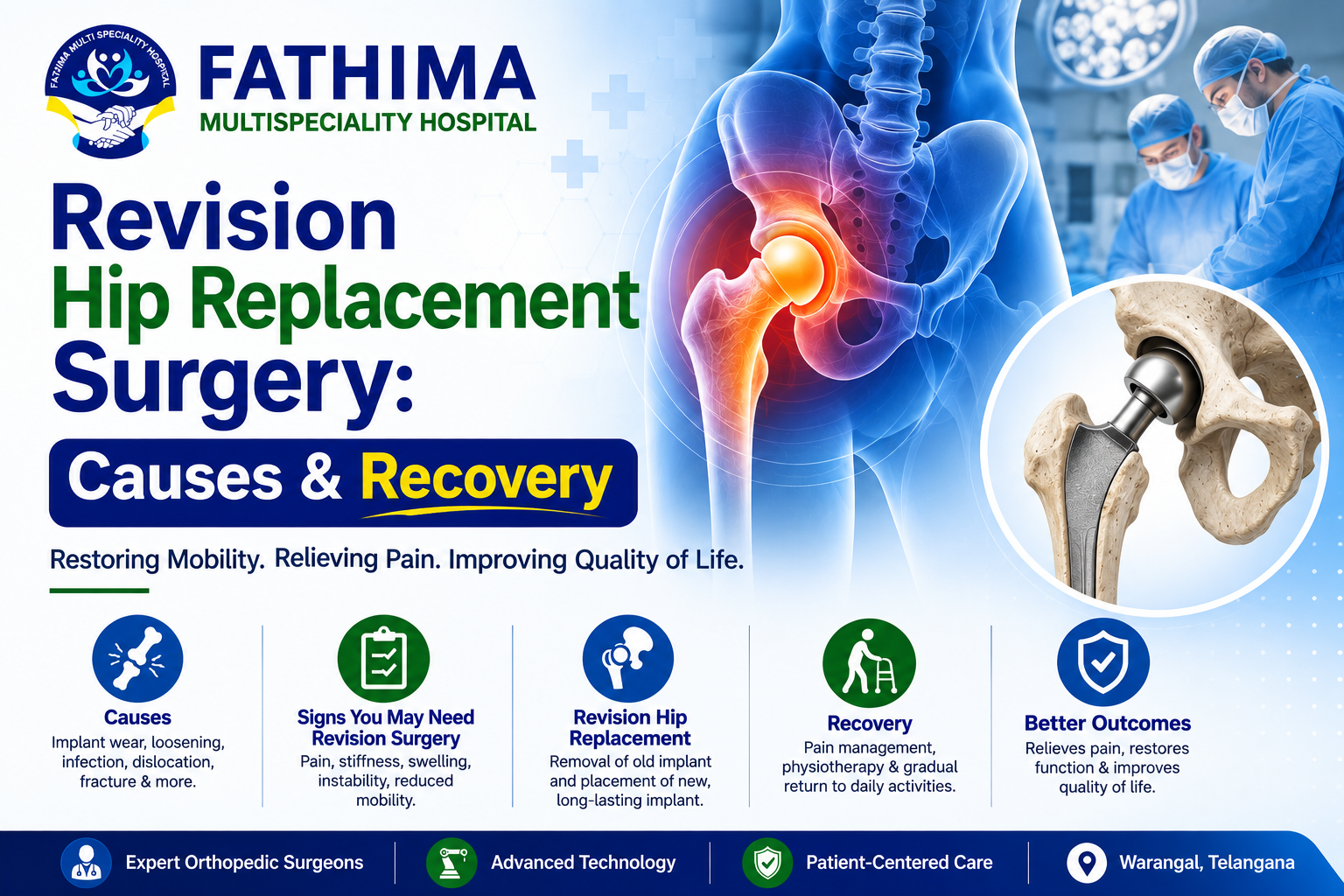
Revision Hip Replacement Surgery: Causes & Recovery
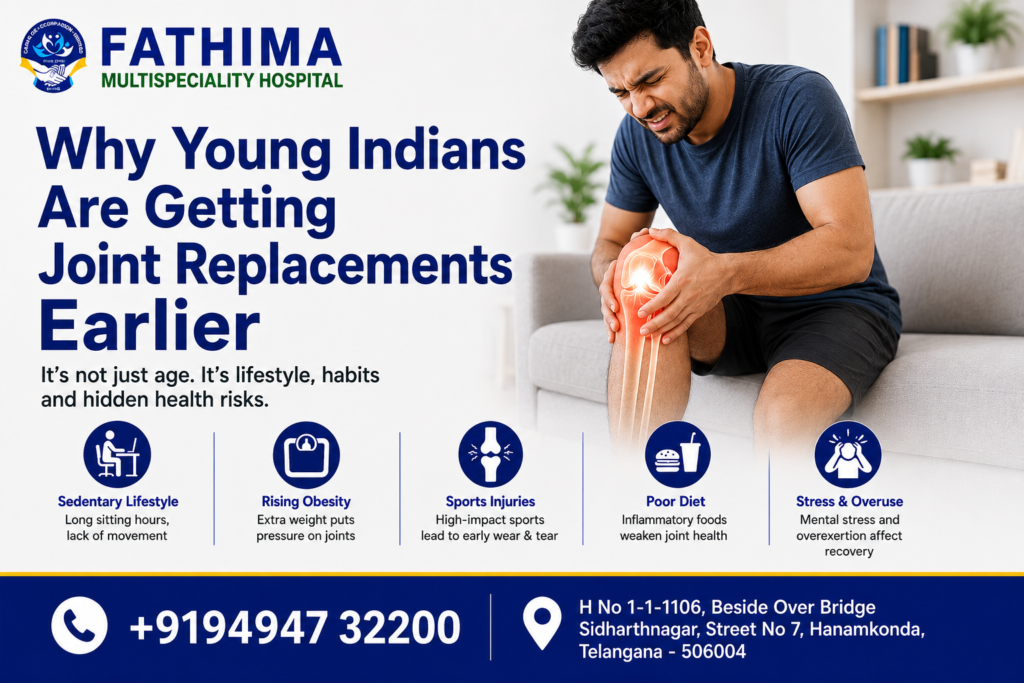
Joint replacement is for the elderly.” That assumption is quietly — and rapidly — becoming outdated.
Across India, orthopaedic surgeons are seeing a striking shift: a growing number of patients walking into clinics for knee and hip replacement consultations are in their 30s and 40s, sometimes even younger. This is no longer a rare occurrence — it is a documented trend, and it raises urgent questions every Indian should understand.
As an orthopaedic specialist at Fathima Multispeciality Hospital in Warangal — the first hospital in the region to offer robotic joint replacement surgery — I see this pattern firsthand every week. Here is what the data, and my clinical experience, tells us about why this is happening.
30s:Age some patients now need knee replacement in India
40%: Rise in joint replacement surgeries among under-50s in the last decade
70%: Indians have insufficient Vitamin D — a key bone health driver
01: The Sedentary Desk Job Epidemic
India’s IT boom and work-from-home culture have created a generation that sits for 8–12 hours a day. Prolonged sitting increases pressure on the knee joint, weakens the surrounding muscles, and accelerates cartilage breakdown. Without regular movement, the protective cushioning between joints deteriorates silently — until the damage is irreversible without surgical intervention.
02: Obesity Rates Are Rising — and Joints Are Paying the Price
Every extra kilogram of body weight adds approximately 4 kg of pressure on the knee joint during walking. India’s urban obesity rate has more than doubled in the last 20 years. Young adults carrying excess weight — especially around the abdomen — are placing a chronic, compounding load on their joints from their 20s onwards. By the time they reach 38 or 42, the joint is already at a stage that would typically be seen in a 65-year-old.
03: High-Impact Sports Without Proper Conditioning
The fitness revolution — CrossFit, marathon running, badminton leagues, cricket — has brought millions of young Indians into sport. But many jump into high-impact activity without proper joint conditioning, warm-up protocols, or technique training. Repeated micro-trauma to the cartilage, combined with ligament injuries that are treated inadequately (or ignored), can set a joint on a path toward early degeneration and eventual replacement.
04: Vitamin D and Calcium Deficiency — India’s Silent Bone Threat
Despite living in a sun-rich country, over 70% of Indians have suboptimal Vitamin D levels. Modern lifestyles — air-conditioned offices, indoor living, sunscreen use — mean many Indians never get adequate sun exposure. Vitamin D is critical for calcium absorption and bone density. Without it, bones become porous and joints degrade faster. This nutritional gap is robbing young Indians of the bone capital they need to carry them into old age.
05: India’s Unique Squatting Culture and Joint Anatomy
Traditional Indian habits — squatting for prayer, using floor-level toilets, sitting cross-legged for extended periods — place the knee in extreme flexion repeatedly over a lifetime. While these are natural positions, doing them with an already weakened or inflamed joint significantly accelerates cartilage wear. Combined with a genetic predisposition to knee arthritis seen across the subcontinent, the cumulative impact starts much earlier than in Western populations.
06: “I’ll Bear the Pain” — The Most Dangerous Attitude
Perhaps the most preventable cause. Many young Indians tolerate joint pain for years, attributing it to overwork, age, or minor strain. By the time they seek specialist care, the cartilage has worn completely, the bones are rubbing together, and the only remaining option is replacement. A condition that could have been managed with physiotherapy, medication, or a minor procedure at age 32 becomes a major surgery at age 41.
A key insight from our practice: The majority of young patients who come to Fathima Multispeciality Hospital for joint replacement consultations had symptoms for 2–5 years before seeking help. In almost every case, earlier intervention would have delayed or prevented the need for surgery entirely.
When a younger patient does need joint replacement, the stakes are higher — they are more active, they will live with the implant longer, and they need the best possible alignment and longevity from the surgery. This is precisely where robotic-assisted joint replacement delivers transformative results.
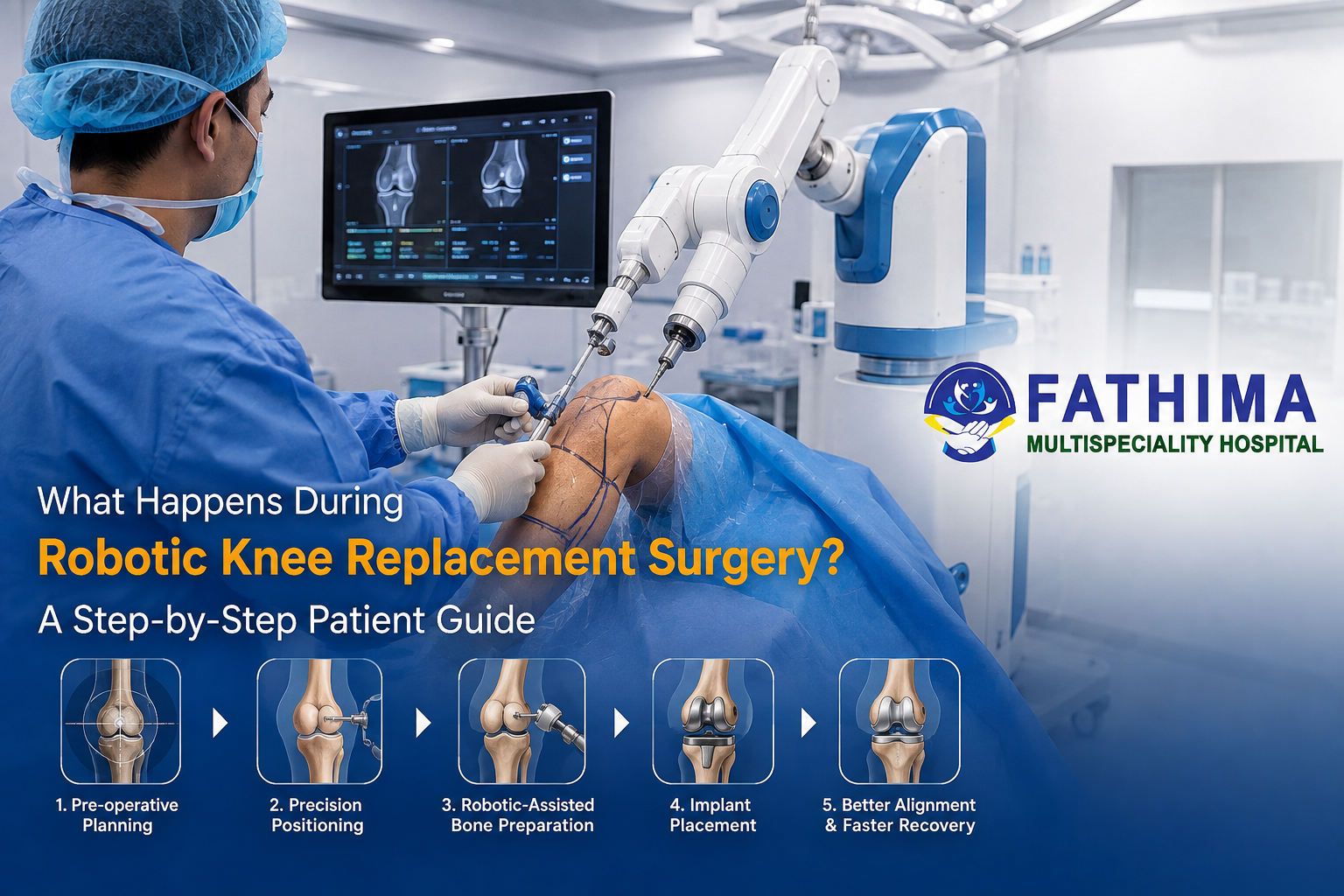
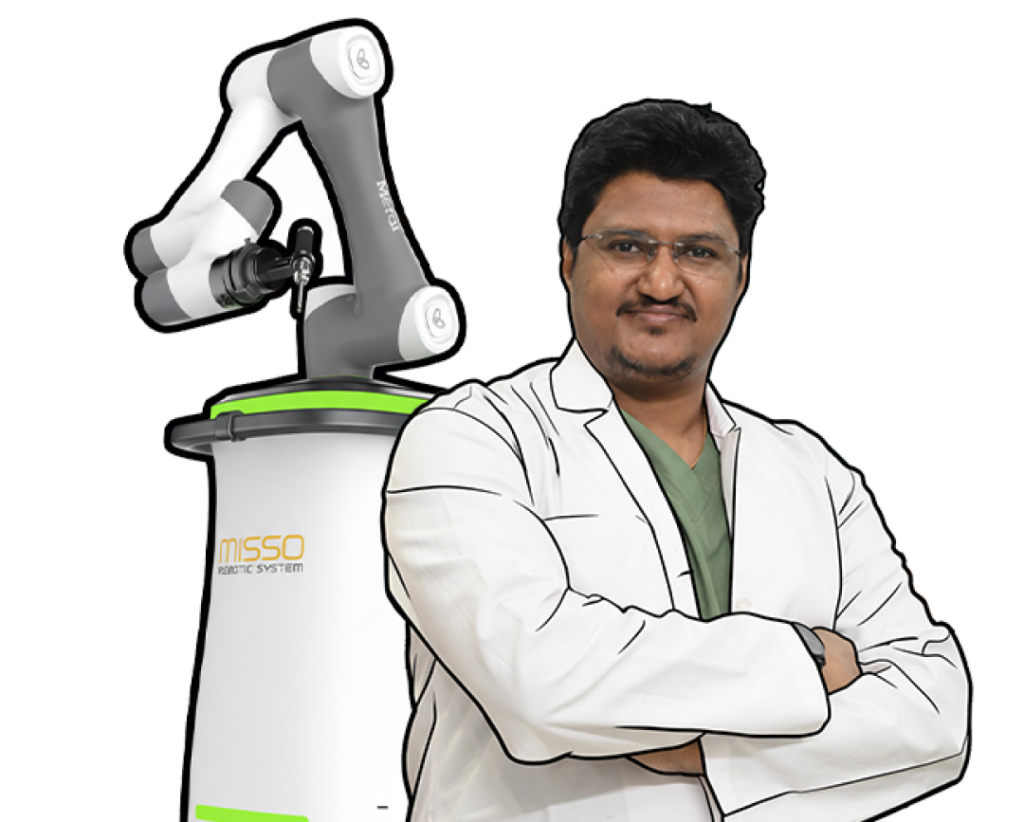
At Fathima Multispeciality Hospital, we are proud to be the first and only hospital in the Warangal region to offer robotic knee replacement surgery — backed by a ₹7 crore investment in cutting-edge technology. Our robotic system allows Dr. Sukesh Reddy P to plan every surgery with sub-millimetre precision, ensuring perfect implant positioning, better joint alignment, and significantly longer implant life compared to conventional surgery.
For a 40-year-old patient, this difference is not cosmetic — it is the difference between one surgery in a lifetime versus needing a revision in 15 years.
Sub-millimetre precisionFaster recoveryLess post-op painLonger implant lifeBetter alignmentMinimally invasive
The trend of early joint replacement in young Indians is real, it is growing, and it is largely preventable with timely awareness and action. Maintaining a healthy weight, staying physically active with proper technique, addressing nutritional deficiencies, and — most critically — seeking medical attention when symptoms first appear can dramatically alter your joint health trajectory.
For those who do need joint replacement, the message is equally important: choose precision. At Fathima Multispeciality Hospital, Dr. Sukesh Reddy P and our orthopaedic team offer the most advanced robotic joint replacement technology available in Warangal — giving younger, more active patients the best possible outcome and the longest possible implant life.
Your joints carry you through life. Invest in them early, and they will carry you far.
1Q: Why are young Indians getting joint replacements at an early age?
Ans: Rising obesity, sedentary desk jobs, high-impact sports injuries, Vitamin D deficiency, and delayed medical treatment are the key reasons young Indians under 45 are needing joint replacement surgery earlier than previous generations.
2Q: Is robotic joint replacement better for younger patients?
Ans: Yes. Robotic joint replacement offers higher precision, better implant alignment, and longer implant life — making it especially ideal for younger, more active patients.
H No 1-1-1106, Beside Over Bridge Sidharthnagar, Street No 7, Hanamkonda, Telangana - 506004