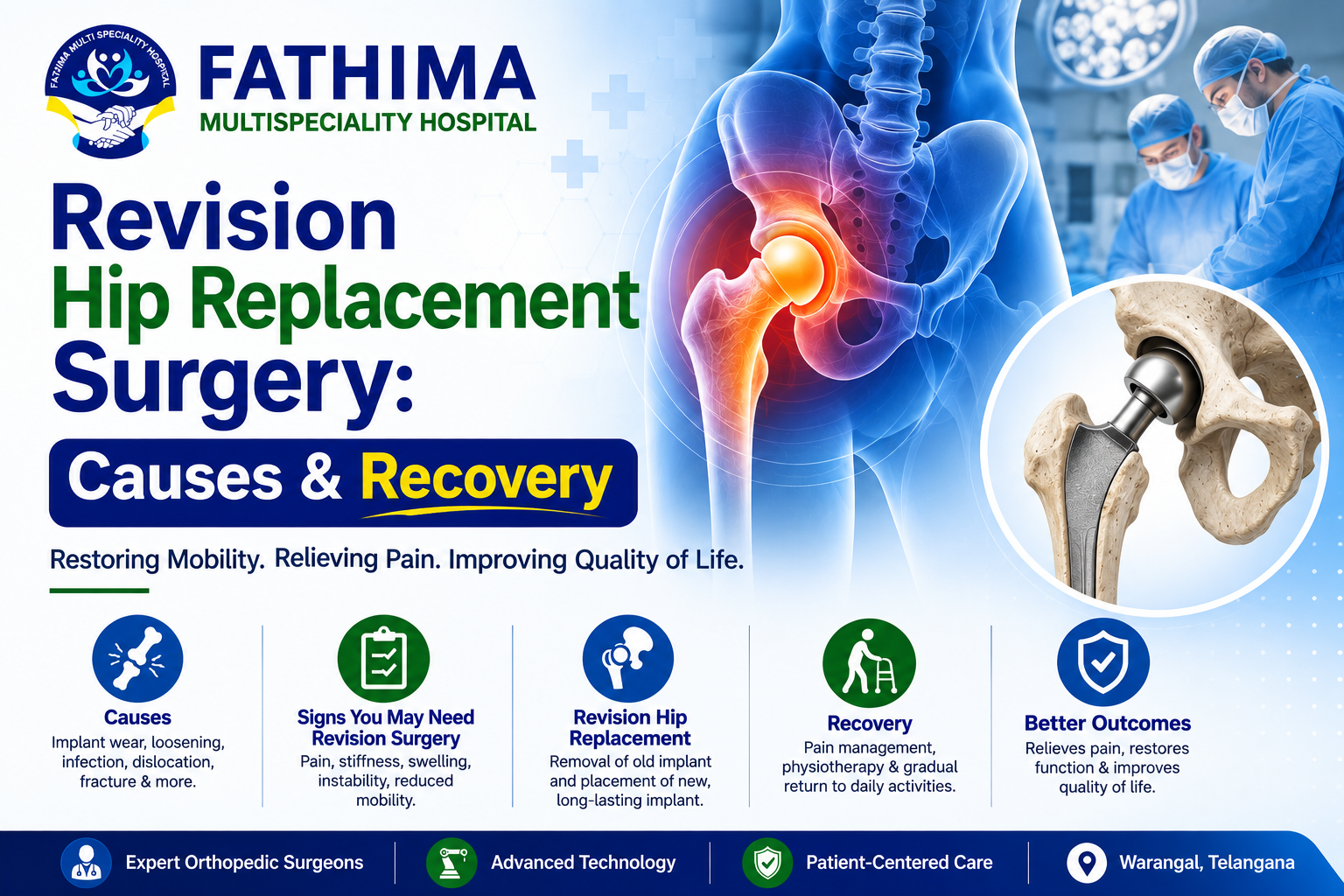
Revision Hip Replacement Surgery: Causes & Recovery
Chronic shoulder pain or arthritis? Get expert shoulder joint replacement in Warangal by Dr. Sukesh Reddy (MS Ortho) at Fathima Multispeciality Hospital, Hanamkonda.
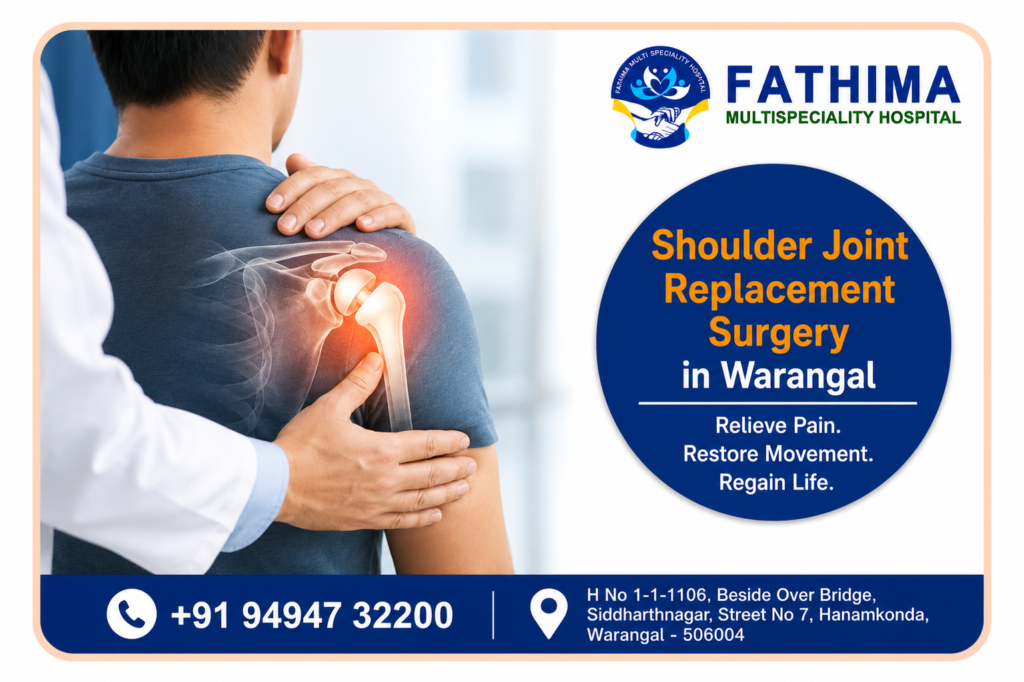
shoulder joint with artificial components, relieving pain and restoring movement when arthritis, fracture, or joint degeneration makes the shoulder unusable. It is recommended when pain medication, physiotherapy, and injections no longer help. At Fathima Multispeciality Hospital in Warangal, shoulder joint conditions are evaluated and treated by Dr. Sukesh Reddy P (MS Orthopaedics), supported by modern operation theatres, advanced imaging, and 24/7 critical care.
The shoulder is a ball-and-socket joint: the rounded head of the upper arm bone (humerus) sits inside a shallow socket (glenoid) in the shoulder blade. Cartilage covers these surfaces so the joint glides smoothly, while surrounding muscles and tendons — the rotator cuff — hold everything stable.
When the cartilage wears away or the bone is severely fractured, the joint can no longer move smoothly. This is when shoulder replacement is considered.
Conditions That May Require Shoulder Replacement
Signs You May Need a Shoulder Evaluation
Type | What It Involves | When It’s Used |
Total Shoulder Replacement | Both the humeral head and the glenoid socket are replaced | Severe arthritis with damage on both joint surfaces and an intact rotator cuff |
Hemiarthroplasty (Partial Replacement) | Only the humeral head is replaced | Glenoid socket is undamaged, or in select fracture cases |
Reverse Shoulder Replacement | The ball-and-socket mechanics are reversed | Rotator cuff is severely torn or non-functional |
The right option depends on the extent of joint damage, bone quality, and the condition of the surrounding tendons — assessed through clinical examination, X-rays, and, if needed, a CT scan.
Recovery and Rehabilitation
Outcomes depend heavily on the strength of the surrounding muscles before surgery and consistent participation in post-operative physiotherapy — both are discussed in detail during consultation.
If shoulder pain is limiting your daily activities or hasn’t improved with conservative treatment, an orthopaedic evaluation can help identify the right next step. Consult Dr. Sukesh Reddy P at Fathima Multispeciality Hospital, Hanamkonda, Warangal.
Call for Appointment: +91 94947 32200
Address: H No 1-1-1106, Beside Over Bridge, Sidharthnagar, Street No 7, Hanamkonda, Telangana – 506004
Frequently Asked Questions (FAQ’s)
1Q: Who needs shoulder joint replacement surgery?
Ans: Patients with severe shoulder arthritis, a badly fractured upper arm bone, or joint damage that hasn’t responded to medication, injections, or physiotherapy are typically considered for shoulder replacement.
2Q: How long does recovery take after shoulder replacement?
Ans: Most patients regain functional shoulder movement within 3 to 6 months, though full recovery timelines vary based on age, health, and adherence to physiotherapy.
H No 1-1-1106, Beside Over Bridge Sidharthnagar, Street No 7, Hanamkonda, Telangana - 506004