
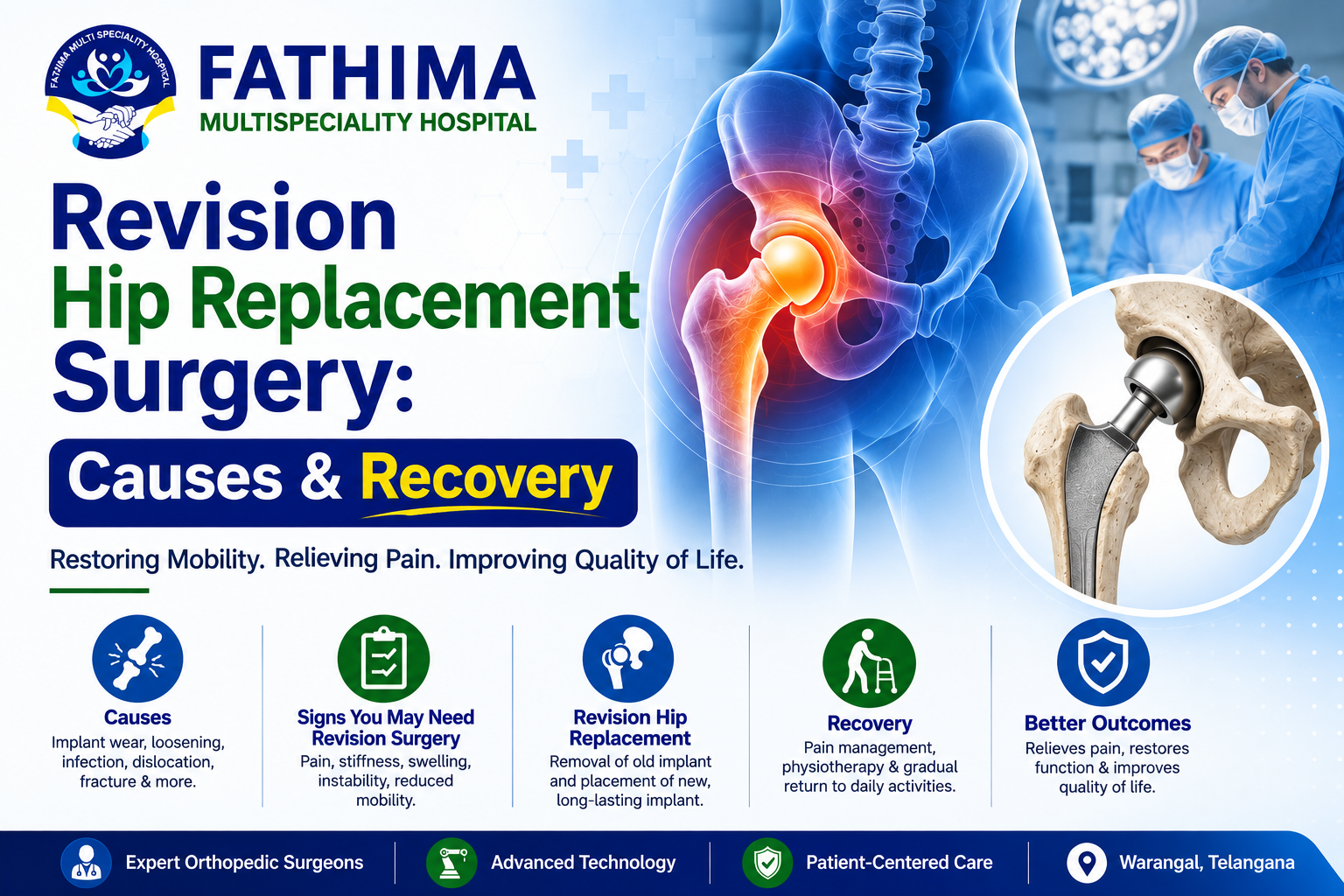
Revision Hip Replacement Surgery: Causes & Recovery
Numbness, weak grip, sudden incontinence? Dr. Sukesh Reddy P, Fathima Multispeciality Hospital Warangal, lists 8 spine warning signs you shouldn’t ignore.
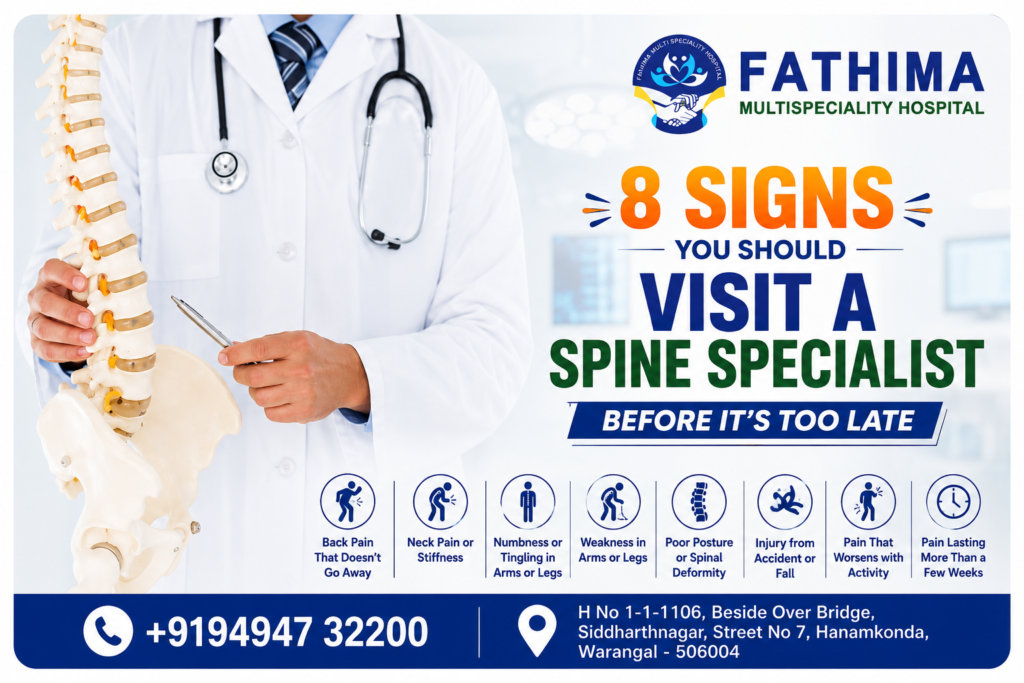
You should visit a spine specialist if you notice numbness in your hands or legs, a weakening grip, leg buckling, sudden loss of bladder or bowel control, difficulty bending or turning, new pain after an accident, pain that radiates down an arm or leg, or back pain that doesn’t improve after a few weeks of rest. Several of these — especially sudden incontinence or rapidly worsening weakness — are medical emergencies. Dr. Sukesh Reddy P at Fathima Multispeciality Hospital, Hanamkonda, recommends early evaluation, since most spine problems are far easier to treat when caught before nerve damage sets in.
The spine carries you through every step, lift, and movement of daily life — yet most people brush off its early warning signals until simple problems turn into major ones. A herniated disc or early nerve compression often starts quietly: a bit of tingling here, mild stiffness there. Left unchecked, these small issues can progress into chronic pain, permanent nerve damage, or reduced mobility.
The good news is that catching these signs early — and seeing a spine specialist promptly — usually means non-surgical treatment is still enough. Below are eight signs that should never be ignored.
i. Numbness in Hands, Feet, or Legs
Persistent numbness or tingling usually points to nerve compression somewhere along the spine. It’s commonly caused by poor posture, disc problems, or arthritis-related thickening of tissue that presses on a nerve.
Act if: the numbness spreads, lasts more than a few days, or keeps recurring. Long-term nerve compression can lead to permanent loss of sensation if untreated.
ii. Weak Grip or Legs Giving Way
When spinal nerves can’t properly signal the muscles, you may notice a weakening grip or your leg buckling unexpectedly while walking or standing. This is often linked to injury, degenerative disc disease, or spinal stenosis associated with aging.
Act if: this weakness is new or getting worse — it raises the risk of falls and indicates the nerve is under real strain. Prompt evaluation is important.
iii. Sudden Loss of Bladder or Bowel Control
This is one of the most serious warning signs in spine care. Sudden incontinence can indicate severe nerve compression, such as cauda equina syndrome, often caused by a significant disc herniation or, less commonly, a tumor blocking spinal signals.
This is a medical emergency. Delay in treatment can lead to permanent dysfunction. Seek immediate medical attention rather than waiting for a scheduled appointment.
iv. Trouble Bending or Turning
Difficulty bending forward, twisting, or turning your torso often signals stiffening spinal joints, commonly from arthritis or disc-related changes. Poor posture, a sedentary lifestyle, and age-related wear all contribute to this.
Act if: daily tasks — getting dressed, reaching for objects, getting out of a car — start becoming difficult. Early therapy can prevent further restriction of movement.
v. New Pain After an Accident or Fall
Pain that appears suddenly after a fall, road accident, or sports injury could indicate a fracture, ligament tear, or disc shift. Even if the pain seems mild at first, underlying spinal injuries aren’t always obvious without imaging.
Act promptly — post-trauma spine pain should always be evaluated with proper diagnostic imaging rather than assumed to be a simple strain.
vi. Pain That Radiates Down an Arm or Leg
When pain travels from the neck into the arm, or from the lower back down through the leg (commonly known as sciatica), it usually means a nerve root is being compressed or irritated by a disc problem.
Act if: the radiating pain is sharp, persistent, or accompanied by tingling or weakness in the limb — this pattern often needs specialist-guided treatment rather than general pain relief alone.
vii. Pain That Doesn’t Improve With Rest
Most simple back pain — from muscle strain, poor posture, or a long day at a desk — improves noticeably within a couple of weeks of rest, gentle movement, and basic care.
Act if: the pain persists beyond 2–3 weeks despite rest and self-care. Pain that lingers usually means an underlying issue, such as a disc problem or nerve irritation, needs proper diagnosis.
viii. Chronic, Worsening Pain Affecting Daily Life
Occasional age-related stiffness is normal and doesn’t automatically mean danger — many people stay fully active once posture improves and supporting muscles are strengthened. But pain that steadily worsens, disrupts sleep, or limits your ability to work, walk, or care for your family is a different matter.
Act if: the pain is progressive rather than stable, or it’s affecting your quality of life over weeks or months. This pattern calls for a specialist assessment rather than continued self-management.
Ignoring these signs allows treatable conditions — like a herniated disc or spinal stenosis — to quietly worsen. Over time, this can lead to chronic pain, irreversible nerve damage, or permanent loss of mobility. Common contributing factors include age-related wear, poor posture, untreated injuries, excess weight, and repetitive strain from daily habits.
The key takeaway: seeing a specialist early often means non-surgical treatment — physiotherapy, medication, posture correction — is enough. Waiting too long narrows your options.
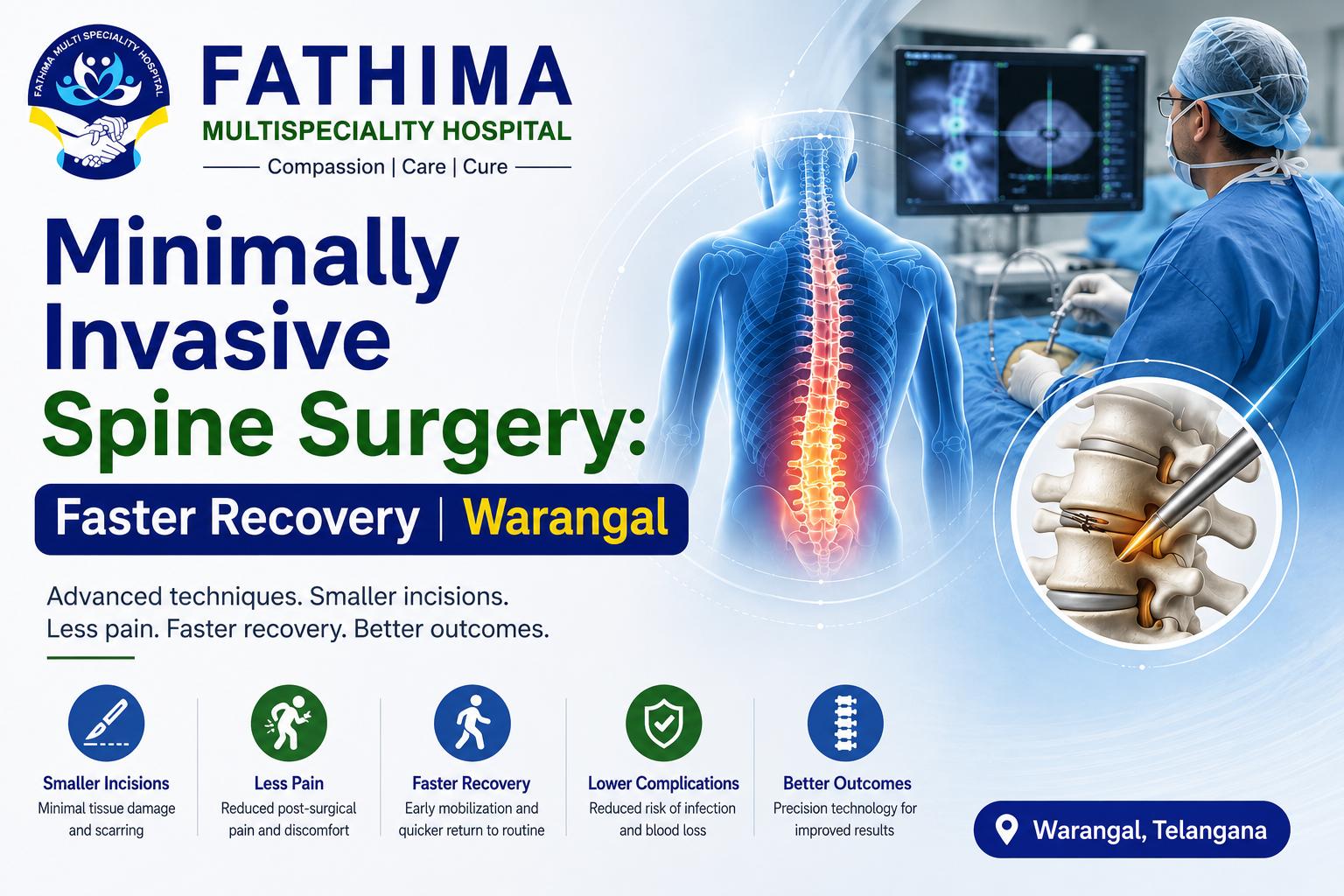
Fathima Multispeciality Hospital, led by Dr. Sukesh Reddy P, offers complete spine care for patients across Warangal, Hanamkonda, Karimnagar, and Khammam, including:
With 13+ years of experience, Dr. Sukesh Reddy P focuses on identifying the root cause early — so that, wherever possible, patients recover without surgery.
Fathima Multispeciality Hospital
📍 H No 1-1-1106, Beside Over Bridge, Siddharthnagar, Street No 7, Hanamkonda, Telangana – 506004
📞 94947 32200
Mail: multispecialityhospitalfathima@gmail.com
🌐 fathimahospitals.in
Don’t wait for pain to take control of your life. If you recognize any of these eight signs, schedule a consultation with Dr. Sukesh Reddy P at Fathima Multispeciality Hospital — early action makes all the difference in spine health.
1Q: What are the warning signs I should see a spine specialist?
Ans: Numbness in the hands or legs, weak grip or leg buckling, sudden loss of bladder or bowel control, trouble bending or turning, new pain after an injury, radiating arm or leg pain, and back pain that doesn’t improve with rest are key warning signs.
2Q: Can spine problems be treated without surgery?
Ans: Yes, in most cases. When caught early, conditions like muscle strain, mild disc bulges, and posture-related pain typically respond well to physiotherapy, medication, and lifestyle correction.
H No 1-1-1106, Beside Over Bridge Sidharthnagar, Street No 7, Hanamkonda, Telangana - 506004