
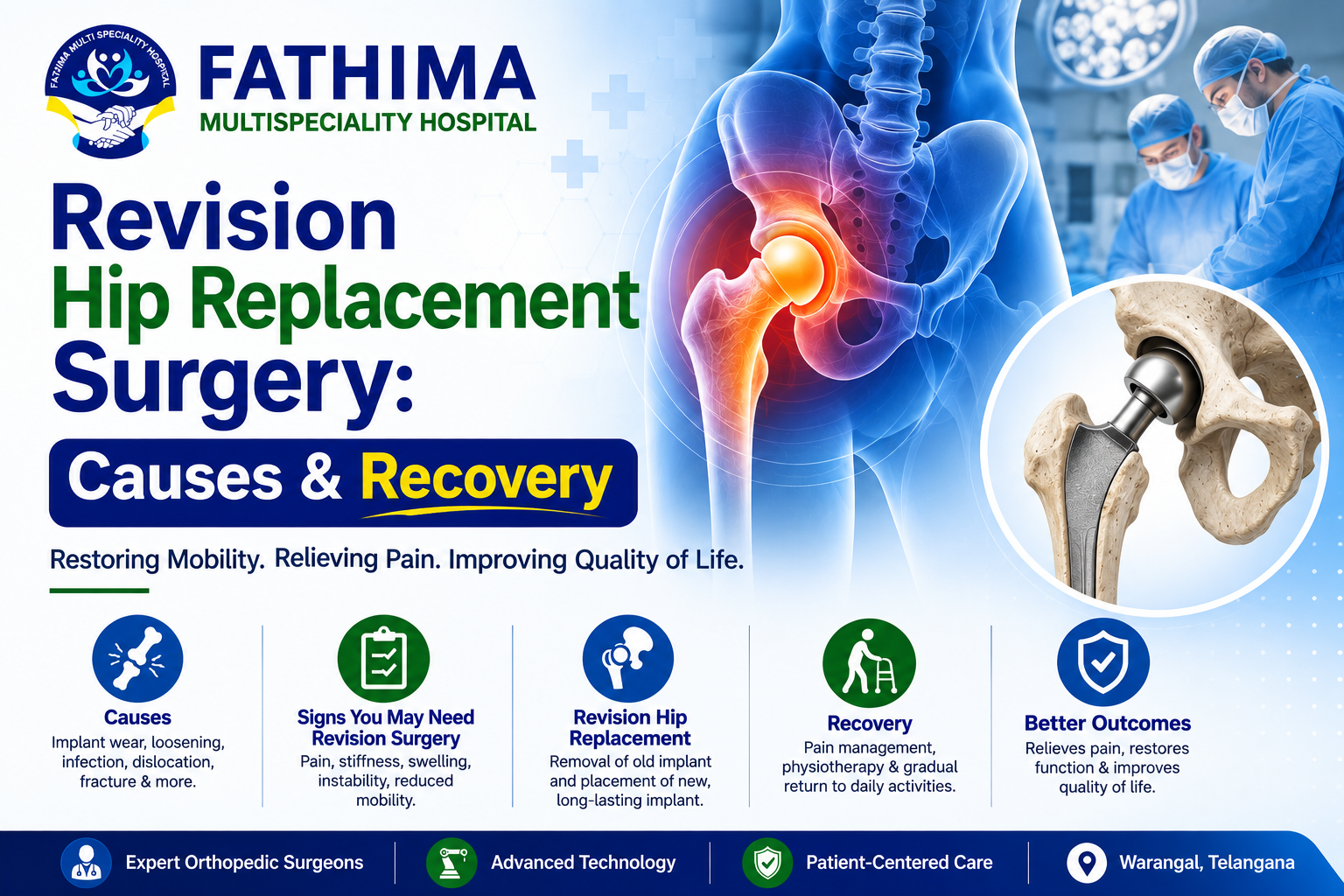
Revision Hip Replacement Surgery: Causes & Recovery
you step outside into bright Telangana sunshine, and yet your bones are slowly weakening from a silent deficiency. Sounds impossible, right? Yet this is the reality for over 70% of Indians — including a large proportion of people in Warangal and the surrounding Telangana region.
Vitamin D is not just a vitamin. It is the very foundation upon which your skeletal strength is built. Without adequate levels, your bones weaken, your joints deteriorate faster, and conditions like osteoporosis and severe knee arthritis become far more likely. And for millions of Indians, that process is already underway — completely unnoticed.
This article explains why the problem is so widespread in India, what the warning signs look like, and what practical steps you can take today — including when it is time to consult an orthopaedic specialist.
India receives some of the highest levels of solar radiation on Earth. So why are so many Indians Vitamin D deficient? The answer lies in a combination of biology, lifestyle, and habits that work against us in ways we rarely think about.
i. Skin Pigmentation
Higher melanin levels in darker skin tones block UV-B rays, requiring 3–5× longer sun exposure to produce the same Vitamin D as lighter skin.
ii. Indoor Lifestyles
Office jobs, long commutes, and air-conditioned spaces mean most people spend the peak sunlight hours entirely indoors.
iii. Cultural Clothing
Traditional Indian clothing often covers most of the body, significantly reducing the skin surface area exposed to sunlight.
iv. Dietary Gaps
Very few traditional Indian foods are naturally rich in Vitamin D. Vegetarian and vegan diets are especially at risk.
v. Air Pollution
Urban pollution — even in cities like Warangal and Hyderabad — filters out the UV-B rays required for skin to synthesise Vitamin D.
vi. Seasonal Avoidance
During hot summers, most people actively avoid midday sun — the very time when UV-B exposure is optimal for Vitamin D synthesis.
Vitamin D’s role in bone health goes far deeper than most people realise. It is not simply about “calcium absorption” — it is involved in a cascade of processes that determine the strength, density, and resilience of your entire skeletal system.
i. Calcium Absorption
Without sufficient Vitamin D, your intestines can absorb only 10–15% of the calcium you consume. With adequate Vitamin D, that figure rises to 30–40%. No matter how much milk or dairy you consume, a Vitamin D deficiency means your bones are not actually receiving the calcium benefit.
ii. Bone Mineralisation
Bones are not just solid calcium blocks. They are living tissue that constantly remodels itself. Vitamin D activates the cells responsible for laying down new bone mineral. Deficiency causes bones to become soft, brittle, and porous — a condition known as osteomalacia in adults and rickets in children.
iii. Muscle Function and Joint Protection
This is a less-discussed but critically important role. Vitamin D is essential for muscle strength and function. Weak muscles around joints — especially the knee — place enormous extra mechanical stress on the cartilage and bone. Over time, this accelerates wear-and-tear arthritis, even in relatively young individuals.
iv. Anti-Inflammatory Effect
Low Vitamin D levels are associated with higher levels of systemic inflammation. Chronic inflammation directly accelerates the breakdown of cartilage in joints like the knee and hip — worsening osteoarthritis and increasing pain and stiffness.
Vitamin D deficiency is often called the “silent epidemic” because most people experience symptoms gradually and attribute them to ageing or overwork. Here are the orthopaedic warning signs you should not ignore:
When to See a Doctor Immediately
If you are experiencing severe knee pain, significant difficulty walking, or have sustained a fracture from a minor fall, do not delay — these may indicate advanced bone deterioration that requires immediate orthopaedic evaluation, not just Vitamin D supplements.
For orthopaedic surgeons, the link between Vitamin D deficiency and knee health is one of the most consequential connections they observe in clinical practice. Research consistently shows that individuals with low Vitamin D levels have significantly higher rates of knee osteoarthritis, more rapid cartilage loss, and worse post-surgical outcomes.
Consider the knee joint, which bears approximately 4–6 times your body weight with every step you take. When the muscles supporting the knee are weakened by Vitamin D deficiency, and the bone mineral density drops below optimal levels, the joint faces compounding stress from multiple directions simultaneously. This accelerates the progression from mild knee discomfort to advanced arthritis — often in people who are only in their 40s or 50s.
In Warangal and the wider Telangana region, where diets are often vegetarian, outdoor activity is limited by heat for several months of the year, and there is limited awareness about bone health screening, this progression is particularly common. Many patients arrive at the clinic when the damage is already significant, unaware that a simple blood test years earlier could have changed their trajectory entirely.
Get a Blood Test First:
Before supplementing, get a 25-hydroxyvitamin D blood test to know your actual levels. Normal is 30–50 ng/mL. Many Indians test below 20 ng/mL, which is clinically deficient. This one test can guide everything that follows.
Strategic Sun Exposure:
Aim for 15–20 minutes of direct sun exposure on the arms and legs between 10 AM and 12 PM, three to four days a week. Avoid sunscreen during this window for maximum benefit. Glass windows block UV-B completely — step outside.
Dietary Sources:
Include fatty fish (salmon, mackerel, sardines), egg yolks, fortified milk, and fortified cereals in your diet. For vegetarians, mushrooms exposed to sunlight and fortified plant-based milks are the best options.
Supplementation Under Medical Guidance:
Most adults in India benefit from 1,000–2,000 IU of Vitamin D3 daily. However, the appropriate dose depends on your blood test results and should always be confirmed by a doctor. Excessive Vitamin D is toxic — never self-medicate with high doses.
Annual Orthopaedic Screening After 40:
If you are above 40 — especially if you have knee pain, a family history of osteoporosis, or have had a fracture — get an annual bone density check (DEXA scan) along with Vitamin D levels. Early detection of bone weakening allows intervention well before surgery becomes necessary.
In cities like Warangal, UV-B radiation is sufficient year-round. The ideal time is between 10 AM and 12 PM. Expose your forearms and lower legs (not just your face) without sunscreen for 15–20 minutes. Darker skin needs longer exposure than lighter skin. After this window, apply sunscreen and cover up to protect against UV-A damage. This small habit, done consistently, can meaningfully improve your Vitamin D levels within 8–12 weeks.
Bone health is not a concern reserved for the elderly. It begins in your 20s and 30s, is shaped by habits throughout your 40s and 50s, and the consequences — or the benefits — are felt most strongly in your 60s and beyond. The good news is that Vitamin D deficiency is one of the most correctable health issues there is. A blood test, a few lifestyle changes, and the right medical support are all it takes to meaningfully change your long-term bone and joint health.
For residents of Warangal and surrounding districts, specialist-level orthopaedic care — including the most advanced robotic joint replacement technology in the entire region — is now available locally, without the need to travel to Hyderabad. Fathima Multispeciality Hospital has invested deeply in bringing this standard of care to our community, because we believe every patient in Warangal deserves access to the same quality of orthopaedic treatment available in India’s largest cities.
Book a consultation with Dr. Sukesh Reddy P — Warangal’s only robotic orthopaedic surgeon. Whether you need a bone health assessment, knee pain evaluation, or a second opinion on a joint problem, we are here to help.
Only Robotic Surgeon in Warangal₹7 Cr Robotic Technology, Robotic Knee Replacement, Robotic Hip Replacement
Book Appointment →📞 +91 94947 32200
H No 1-1-1106, Beside Over Bridge, Sidharthnagar, Hanamkonda, Telangana – 506004
Frequently Asked Questions (FAQ’s)
1Q: Can Vitamin D deficiency cause bone and joint pain?
Ans: Yes. Vitamin D deficiency is a leading cause of bone pain, muscle weakness, and joint stiffness — especially knee pain. Without adequate Vitamin D, your body cannot absorb calcium properly, causing bones to soften and joints to wear down faster. In India, over 70%.
H No 1-1-1106, Beside Over Bridge Sidharthnagar, Street No 7, Hanamkonda, Telangana - 506004