
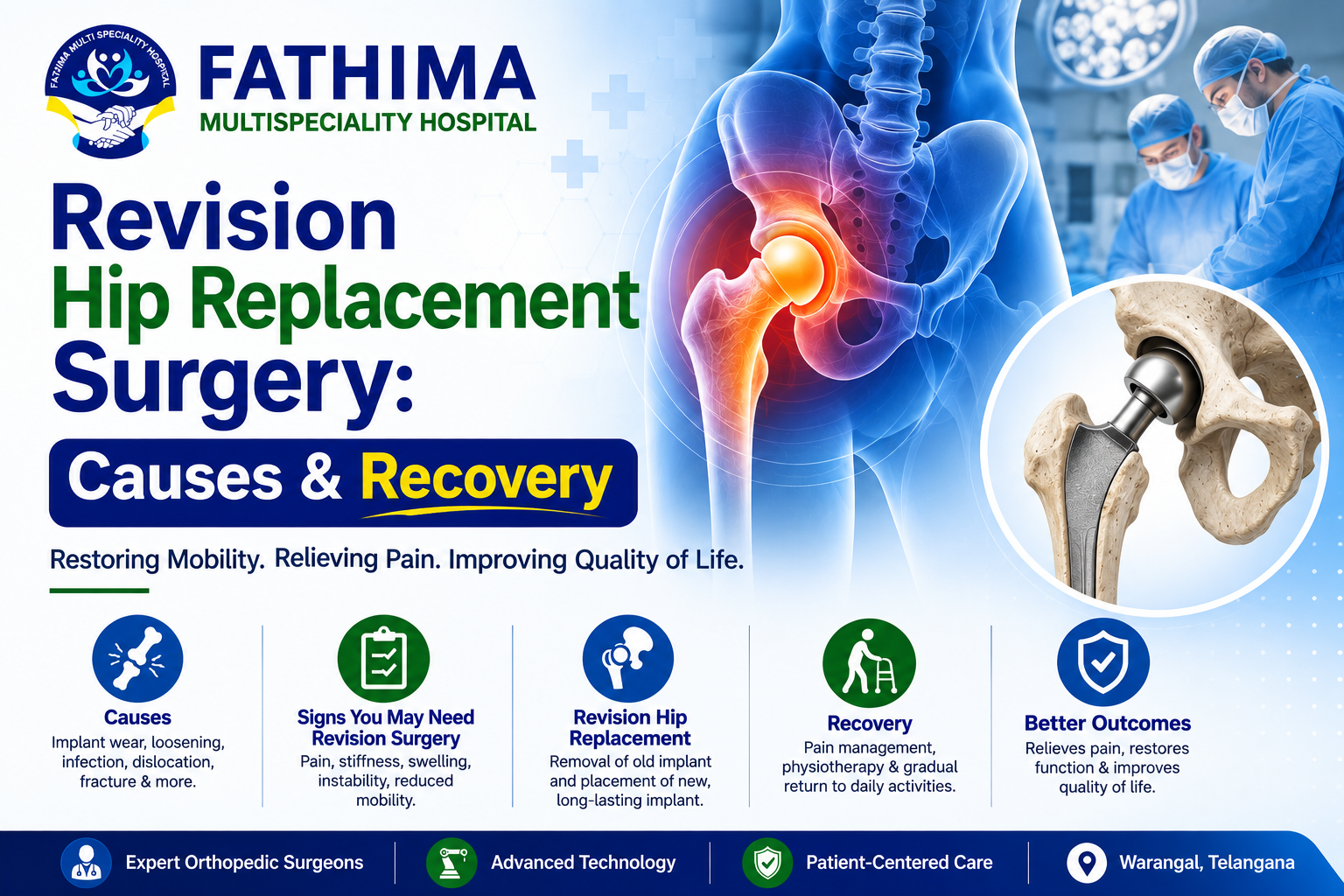
Revision Hip Replacement Surgery: Causes & Recovery
Most people hear “bone health” and immediately think: drink more milk, take a calcium tablet, done.
If only it were that simple.
The truth is, calcium alone cannot save your bones — and after 40, relying on it as your only strategy is one of the most common mistakes that silently leads to fractures, bone density loss, and osteoporosis years down the line.
At Fathima Multispeciality Hospital, Warangal, our orthopaedic specialists see this pattern every day. Patients who consumed calcium supplements for years still show significant bone density decline by the time they walk into our clinic. Why? Because bone strength is built by a team of nutrients working in perfect coordination — and calcium is just one player.
This guide breaks down exactly what your bones need after 40, why each nutrient matters, and how to get them through food, lifestyle, and smart supplementation
Your skeleton is not a static structure — it is living tissue that constantly breaks down and rebuilds in a process called bone remodelling. Until your early 30s, your body builds bone faster than it breaks it down. After that, the equation gradually reverses.
By the time you cross 40, several things begin to happen simultaneously:
The result: you can lose up to 1–2% of bone density per year after 40 if you don’t take the right steps.
But here is the good news — with the right combination of nutrients and lifestyle habits, bone loss is largely preventable and even reversible in early stages.
i. Calcium — The Foundation, Not the Full House
Calcium is the primary mineral in bone tissue, making up about 70% of bone mass. Your body needs it continuously, and if your diet doesn’t supply enough, it borrows calcium from your bones — weakening them over time.
How much you need after 40:
Best food sources:
Important: More is not always better. Calcium supplements above 1,500 mg/day may actually increase cardiovascular risk. Aim to get most of your calcium from food, and supplement only the gap.
ii. Vitamin D — The Gatekeeper That Lets Calcium In
Here is the nutrient most people overlook: without adequate Vitamin D, your gut can absorb only 10–15% of the calcium you consume. With sufficient Vitamin D, absorption rises to 30–40%.
Vitamin D acts as the doorman — it regulates calcium absorption in the intestines and ensures calcium is deposited in bones rather than floating in the bloodstream.
After 40, skin synthesis of Vitamin D from sunlight becomes significantly less efficient. Studies show that over 70% of adults in South Asia — including Telangana — have insufficient Vitamin D levels, even with generous sunlight exposure.
How much you need:
Best sources:
Ask your doctor to check your 25-OH Vitamin D blood levels — a level below 30 ng/mL indicates insufficiency.
iii. Magnesium — The Overlooked Bone Builder
Roughly 60% of the body’s magnesium is stored in bone. It plays a critical role in converting Vitamin D into its active form and in regulating the activity of cells that build (osteoblasts) and break down (osteoclasts) bone tissue.
Low magnesium is directly associated with lower bone mineral density and increased fracture risk — yet it receives almost no attention in mainstream bone health advice.
How much you need:
Best food sources:
Vitamin K2 is the nutrient that tells calcium where to go. It activates a protein called osteocalcin that anchors calcium into the bone matrix. Without enough K2, calcium can end up deposited in arteries and soft tissues rather than in bone — which is both dangerous for the heart and wasteful for bone health.
This is why some research suggests that calcium supplements taken without adequate K2 may contribute to arterial calcification. Getting K2 alongside calcium is not just beneficial — it is protective.
Best food sources of K2:
If your diet is low in these foods, a K2 supplement (MK-7 form, 100–200 mcg/day) may be beneficial — discuss with your doctor.
v. Protein — The Structural Framework
Bone is not just mineral — approximately 30% of bone by weight is made of collagen protein. Protein provides the flexible matrix that gives bone its toughness and resistance to fracture.
Studies consistently show that higher protein intake is associated with greater bone density and lower fracture risk, particularly in older adults. This is especially relevant in vegetarian populations in India where protein intake is often lower than recommended.
How much you need after 40:
Best sources:
Myth to bust: High protein intake does NOT leach calcium from bones, contrary to older beliefs. Current evidence supports adequate protein as a bone protector.
vi. Phosphorus — Calcium’s Partner Mineral
Phosphorus works alongside calcium as the primary mineral in the hydroxyapatite crystals that make up bone tissue. While deficiency is rare (most diets supply enough), getting the balance right matters — too much phosphorus relative to calcium (common with high soft drink consumption) can actually pull calcium out of bone.
Healthy sources: dairy, eggs, fish, nuts, legumes, whole grains.
Limit: excessive cola consumption, which is high in phosphoric acid and disrupts the calcium-phosphorus ratio.
vii. Zinc and Boron — The Supporting Cast
Zinc is required for the action of enzymes that build collagen in bone. Deficiency in zinc impairs bone formation and delays fracture healing. Good sources: meat, shellfish, legumes, pumpkin seeds, whole grains.
Boron helps the body use calcium, magnesium, and Vitamin D more efficiently. It may also help maintain estrogen and testosterone levels, both of which influence bone density. Found in fruits (apples, pears, mangoes), nuts, and vegetables.
Key Lifestyle Factors That Maximise Nutrient Impact
Nutrients work best when paired with the right lifestyle habits:
Weight-bearing exercise — walking, jogging, dancing, and resistance training create mechanical stress on bone, triggering it to become denser. Aim for at least 30 minutes most days.
Quit smoking — smoking directly inhibits bone-forming cells and reduces Vitamin D activation. Smokers lose bone density faster than non-smokers at every age.
Limit alcohol — heavy alcohol consumption interferes with calcium absorption and reduces bone formation.
Adequate sleep — bone remodelling happens largely at night during deep sleep. Chronic sleep deprivation is an underrated bone health risk.
Sunlight exposure — a simple, free, and highly effective way to support Vitamin D synthesis.
Meal | Bone-Boosting Foods |
Breakfast | Ragi porridge with milk + 2 boiled eggs + a handful of almonds |
Mid-morning | A glass of fortified milk or buttermilk |
Lunch | Brown rice + rajma curry + spinach sabzi + curd |
Evening snack | Sesame (til) chikki or mixed nuts |
Dinner | Grilled fish or paneer + dal + moringa leaves sabzi + chapati |
This meal plan provides calcium, Vitamin D (from eggs/fish), magnesium (from nuts/legumes), protein, and Vitamin K2 in one balanced day.
If you are over 40, consider consulting an orthopaedic specialist if:
A DEXA scan (bone density test) is a simple, painless, and low-radiation test that can assess your bone density and identify osteopenia or osteoporosis early — before a fracture occurs.
“In over a decade of orthopaedic practice, the most preventable cases I encounter are osteoporosis-related fractures in patients who were simply never counselled beyond ‘take calcium tablets.’ Bone health is a symphony of nutrients, hormones, and lifestyle — and it requires the same attention we give to heart health or diabetes. Start early, test regularly, and don’t wait for a fracture to act.”
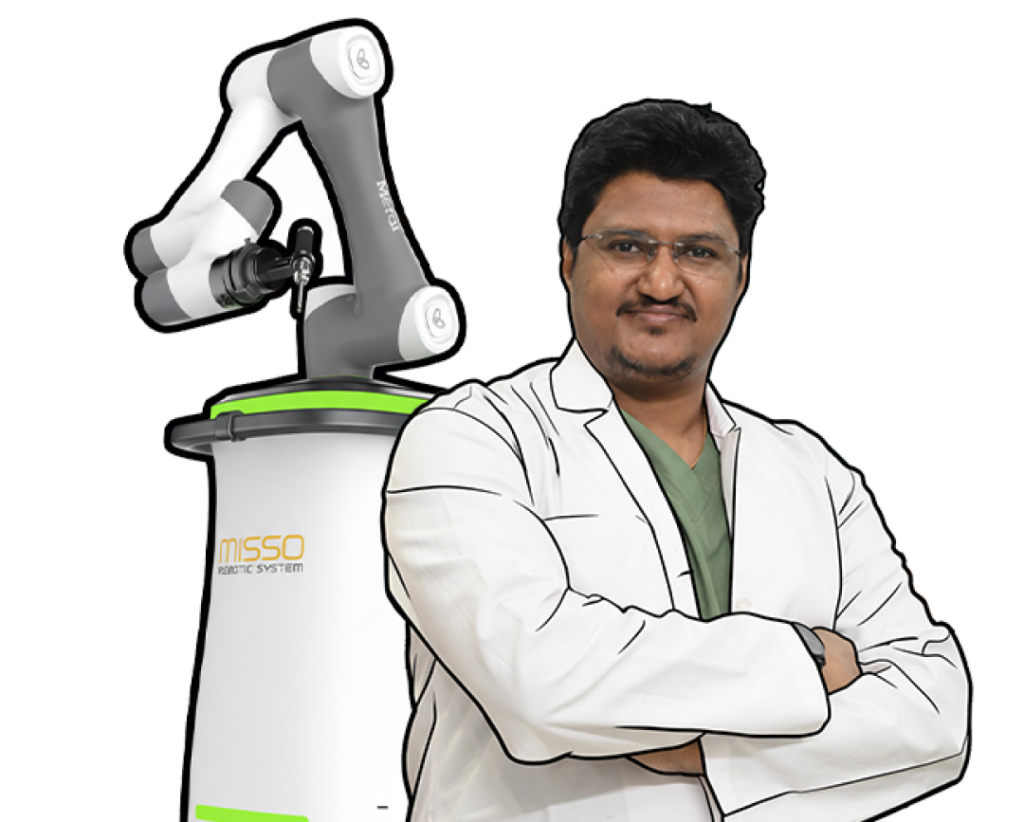
— Dr. Sukesh Reddy P, MS Orthopaedics Fathima Multispeciality Hospital, Warangal
` is redefining orthopaedic care in Warangal by introducing advanced Robotic Knee Replacement Surgery — backed by a ₹7 Crore investment in cutting-edge medical technology. Led by Dr. Sukesh Reddy P (MS Orthopaedics), the hospital is committed to bringing metro-level robotic healthcare to the people of Warangal and surrounding regions.
Whether you need a bone density evaluation, nutritional counselling for bone health, or advanced joint replacement surgery, our team is here to guide you every step of the way.
📍 Fathima Multispeciality Hospital, Warangal
🌐www.fathimahospitals.in
H No 1-1-1106, Beside Over Bridge Sidharthnagar, Street No 7, Hanamkonda, Telangana - 506004