
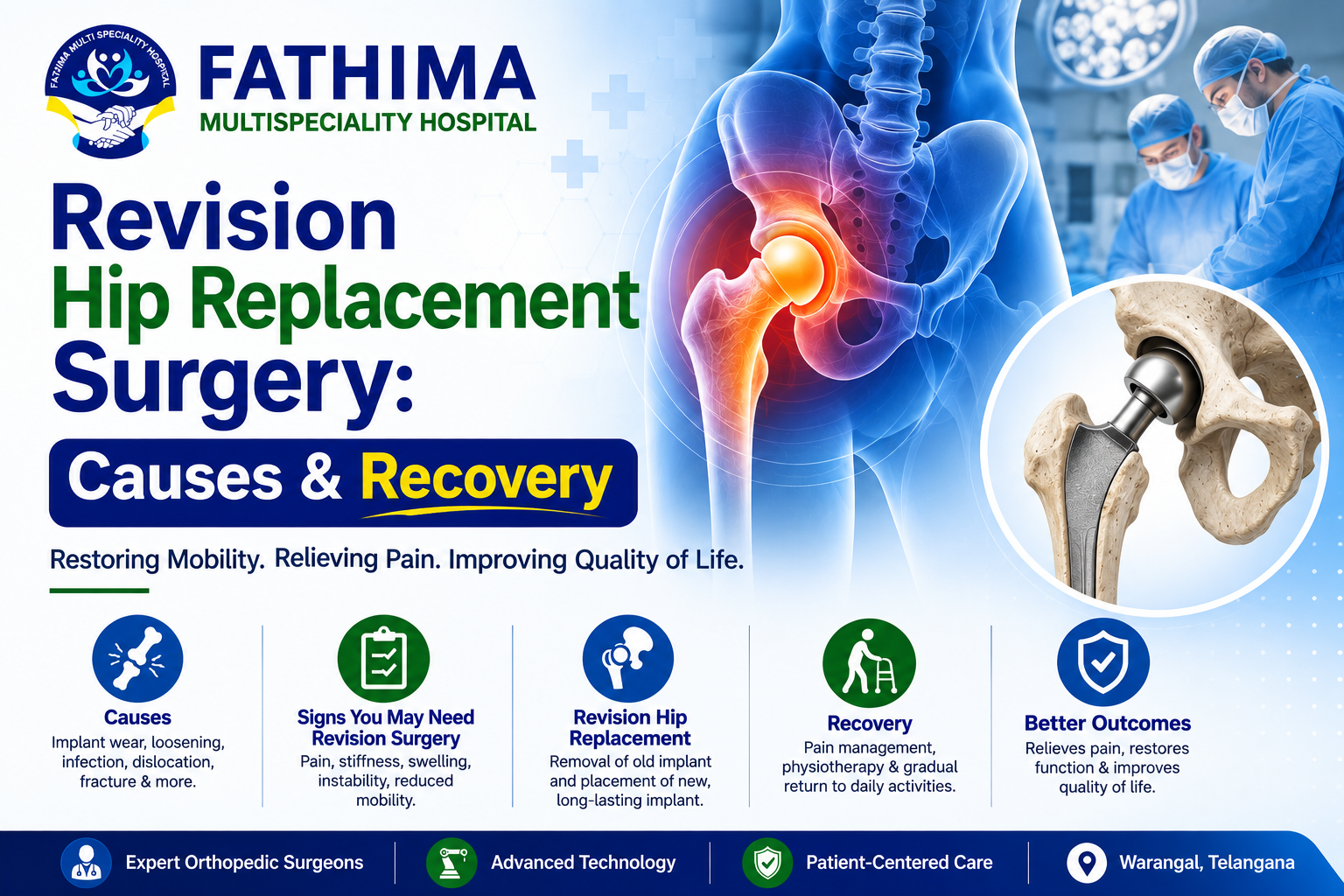
Revision Hip Replacement Surgery: Causes & Recovery
You feel fine. No pain, no weakness, no obvious symptoms. So why would you need a bone density test?
Here is the uncomfortable truth about bone loss: it has no symptoms until it is too late.
By the time you experience a fracture from a minor fall — a trip on the stairs, a sudden twist — your bones may have already lost 30% or more of their density. Osteoporosis is called a “silent disease” precisely because it steals your bone strength quietly, invisibly, over years — while you go about your life completely unaware.
A bone density test is the only way to detect this loss before a fracture happens. And your 40s are exactly the right decade to start paying attention.
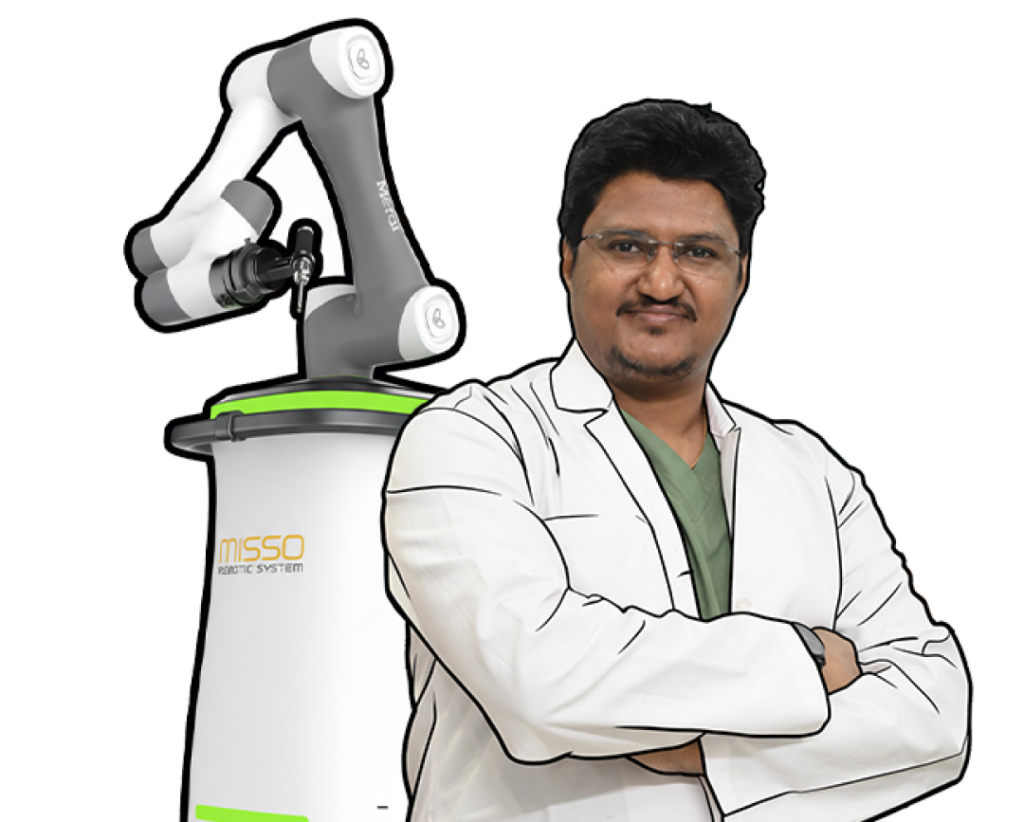
At Fathima Multispeciality Hospital, Warangal, Dr. Sukesh Reddy P (MS Orthopaedics) regularly counsels patients on when and why to get tested — and what to do once they have their results. This guide answers every question you may have about bone density testing.
A bone density test — most commonly a DEXA scan (Dual-Energy X-ray Absorptiometry) — measures the amount of calcium and other minerals packed into a specific area of your bone. It is the gold standard for diagnosing osteopenia (early bone loss) and osteoporosis (advanced bone loss).
The scan is:
The test typically measures bone density at two sites: the lumbar spine (lower back) and the hip, as these are the areas most vulnerable to osteoporotic fractures.
After a DEXA scan, your results are reported as a T-score — a number that compares your bone density to that of a healthy 30-year-old of the same sex.
T-Score | What It Means |
-1.0 and above | Normal bone density |
Between -1.0 and -2.5 | Osteopenia (low bone density — early warning) |
-2.5 and below | Osteoporosis (significant bone loss — high fracture risk) |
An important note: Osteopenia is not a disease — it is a warning signal. It means your bones are losing density faster than they should, and intervention now (through nutrition, exercise, and sometimes medication) can prevent progression to osteoporosis.
If your T-score shows osteoporosis, Dr. Sukesh Reddy P and the team at Fathima Multispeciality Hospital will work with you on a personalised treatment plan — which may include lifestyle changes, calcium and Vitamin D optimisation, and medical therapy.
There is no single universal answer. The right time depends on your age, sex, hormonal status, and personal risk factors. Here is a clear breakdown:
For Women: Start Thinking About It in Your Early 40s
Women are at significantly higher risk of osteoporosis than men — primarily because of estrogen. Estrogen plays a powerful role in protecting bone density, and as women approach menopause, estrogen levels begin to drop, sometimes years before periods actually stop (this phase is called perimenopause).
Recommended testing timelines for women:
Osteoporosis in men is dramatically underdiagnosed — partly because it is less common, and partly because men and their doctors rarely think to check.
The reality: 1 in 5 men over 50 will suffer an osteoporotic fracture in their lifetime. Men also tend to have worse outcomes after hip fractures than women, with higher rates of complications and mortality.
Recommended testing timelines for men:
Men in their 40s and 50s should get tested if they have:
Regardless of gender, book a bone density test right away if you notice:
One DEXA scan is a starting point, not the whole story. Bone density changes over time, and follow-up scans help you and your doctor track whether your interventions are working.
General repeat testing intervals:
Your Bone Status | Recommended Repeat Interval |
Normal (T-score above -1.0) | Every 3–5 years |
Osteopenia, mild (-1.0 to -1.5) | Every 3 years |
Osteopenia, moderate (-1.5 to -2.0) | Every 2 years |
Osteopenia, severe (close to -2.5) | Every 1–2 years |
Osteoporosis on medication | Every 1–2 years to monitor treatment response |
Your DEXA report will include your T-score and often a FRAX score — a tool that calculates your 10-year probability of a major osteoporotic fracture, taking into account additional factors like age, weight, smoking, and family history.
Based on these results, Dr. Sukesh Reddy P at Fathima Multispeciality Hospital will guide you through the appropriate next steps:
If your bone density is normal: Great news — but don’t become complacent. Your 40s are the window to lock in healthy habits: weight-bearing exercise, a nutrient-rich diet, Vitamin D optimisation, and regular re-screening.
If you have osteopenia: This is a critical opportunity. Osteopenia is reversible with the right intervention. Your doctor will recommend targeted nutritional support, an exercise plan, and lifestyle changes. Medication is generally not required at this stage.
If you have osteoporosis: A comprehensive treatment plan will be developed. This typically includes calcium and Vitamin D supplementation, weight-bearing and resistance exercise, fall prevention strategies, and medical therapy (such as bisphosphonates or other bone-strengthening medications). Underlying causes will also be investigated and addressed.
Yes — and this is one of the most empowering messages from modern orthopaedic medicine.
Bone is living tissue. With the right intervention, bone density can be maintained and, in many cases, improved — even in your 50s and 60s. The key actions are:
“A bone density test is one of the simplest and most important preventive steps a person in their 40s can take — yet it remains vastly underutilised in our region. I see patients every week who are shocked to discover significant bone loss they had no idea about. The fracture that brings them to us is often the first sign. Warangal no longer needs to send patients to Hyderabad for advanced orthopaedic evaluation or treatment — we have built the infrastructure here at Fathima Hospital to diagnose, treat, and care for every bone and joint condition with the same precision you would expect from the best metros in India.”
— Dr. Sukesh Reddy P, MS Orthopaedics Fathima Multispeciality Hospital, Warangal
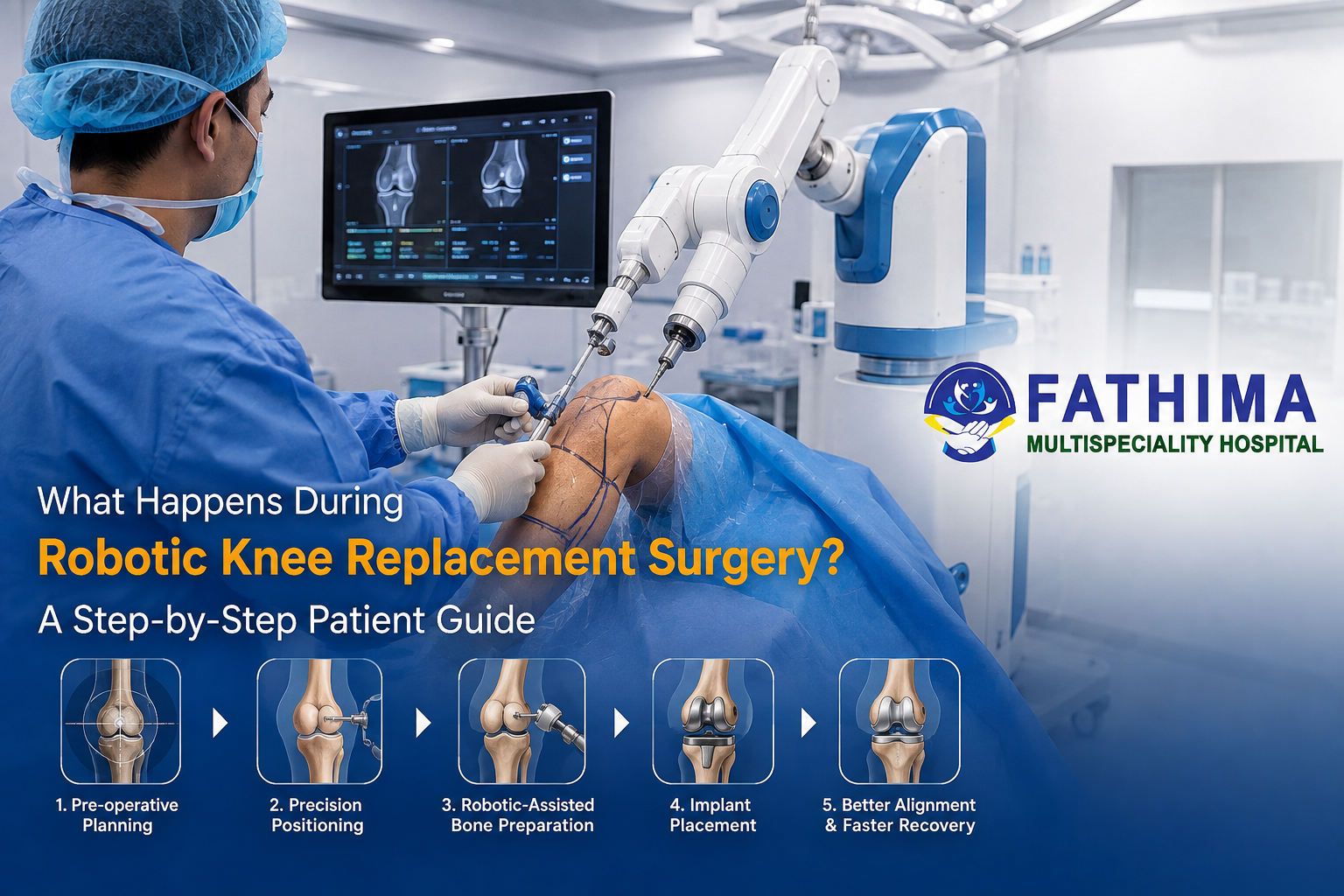
Fathima Multispeciality Hospital is redefining orthopaedic care in Warangal. As the region’s first centre to introduce advanced Robotic Knee Replacement Surgery — backed by a ₹7 Crore investment in cutting-edge medical technology — we bring precision, expertise, and compassionate care under one roof.
Led by Dr. Sukesh Reddy P (MS Orthopaedics), our orthopaedic department offers:
You no longer need to travel to a metro city for world-class bone and joint care. Fathima Multispeciality Hospital is right here in Warangal — for you and your family.
📍 Fathima Multispeciality Hospital, Warangal
🌐 www.fathimahospitals.in
1Q: Is there a good orthopaedic hospital in Warangal?
Ans: Yes. Fathima Multispeciality Hospital in Warangal is widely regarded as the region’s leading orthopaedic centre. Led by Dr. Sukesh Reddy P (MS Orthopaedics), it is the first hospital in Warangal to offer Robotic Knee Replacement Surgery, bringing world-class orthopaedic care to patients locally.
2Q: Can I get osteoporosis treatment at Fathima Multispeciality Hospital in Warangal?
Ans: Yes. Dr. Sukesh Reddy P at Fathima Multispeciality Hospital provides comprehensive osteoporosis management — including diagnosis, nutritional counselling, exercise guidance, and medical therapy — all available locally in Warangal without needing to travel to Hyderabad.
H No 1-1-1106, Beside Over Bridge Sidharthnagar, Street No 7, Hanamkonda, Telangana - 506004