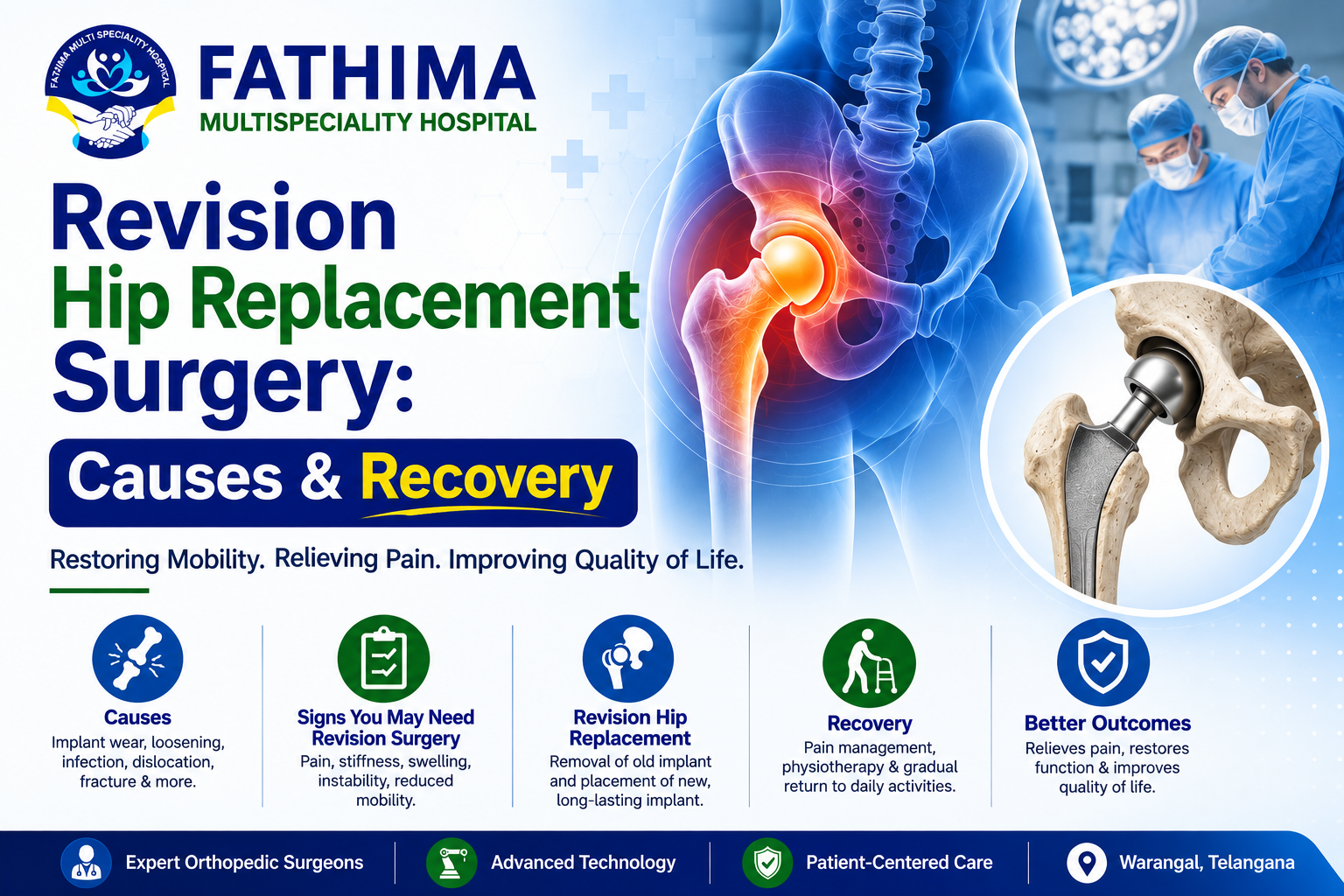
Revision Hip Replacement Surgery: Causes & Recovery
Your knee hurts. It started a few days ago — or maybe months ago — and now it’s affecting how you walk, sleep, and go about your day. You’ve probably Googled your symptoms and come across two likely culprits: arthritis or a ligament injury.
The tricky part? Both can cause pain, swelling, and stiffness. But the treatment for each is very different. This guide will help you understand which one you might be dealing with — and what to do next.
Arthritis is wear-and-tear damage to the cartilage — the cushioning inside your knee joint. Over time, the cartilage breaks down and bones start rubbing against each other. It’s most common in people over 45, though it can occur earlier.
A ligament injury happens when the tough bands of tissue connecting your knee bones are stretched or torn — usually during a sudden twist, fall, or impact. This includes injuries to the ACL, MCL, PCL, and LCL.
Spot the difference: symptoms
Arthritis
Ligament injury
Feature | Arthritis | Ligament injury |
Onset | Gradual, over months/years | Sudden, after trauma |
Age group | Usually 45+ | Any age, common in athletes |
Swelling | Mild, recurring | Rapid and significant |
Joint stability | Usually stable | Often feels loose or wobbly |
Cause | Wear and tear / age | Sports, fall, accident |
Morning stiffness | Yes, common | Rare unless chronic |
Both knees | Sometimes | Rarely |
Don’t rely only on symptoms — the diagnosis must be confirmed by a specialist. Here’s what your orthopaedic doctor will typically do:
See a doctor immediately if you have:
Once diagnosed, the treatment path becomes clearer:
For arthritis: Physiotherapy, weight management, anti-inflammatory medications, and injections can help in early to mid stages. In advanced cases — where the cartilage is severely worn — knee replacement surgery gives lasting relief and restores full mobility.
For ligament injuries: Mild sprains often heal with rest, ice, compression, and physiotherapy (RICE protocol). Partial tears may recover with bracing. Complete tears — especially ACL tears in active individuals — typically need surgical reconstruction for full recovery.
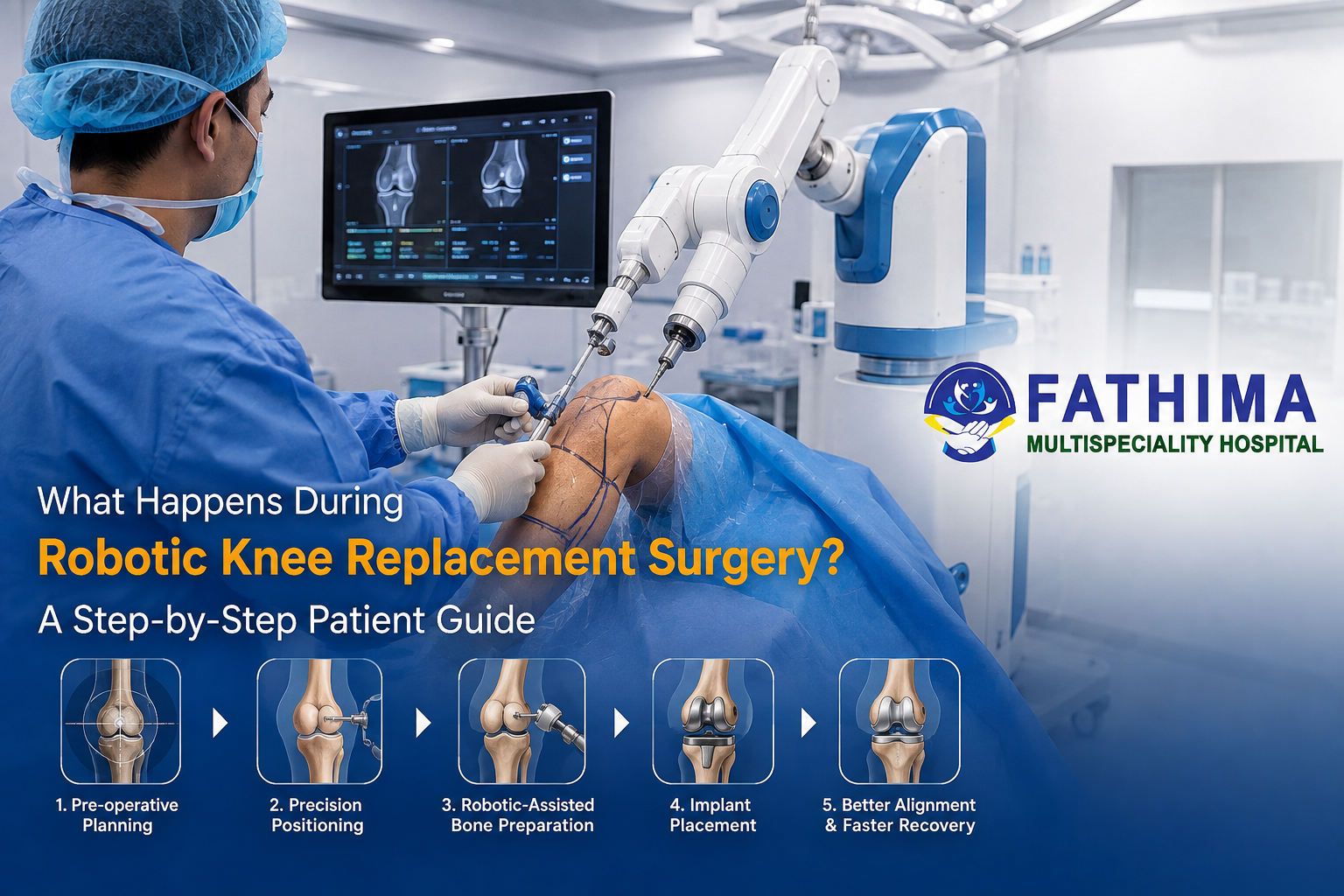
Fathima Hospital offers Robotic Knee Replacement Surgery — the most precise approach for advanced arthritis, backed by ₹7 Crore in advanced medical technology.
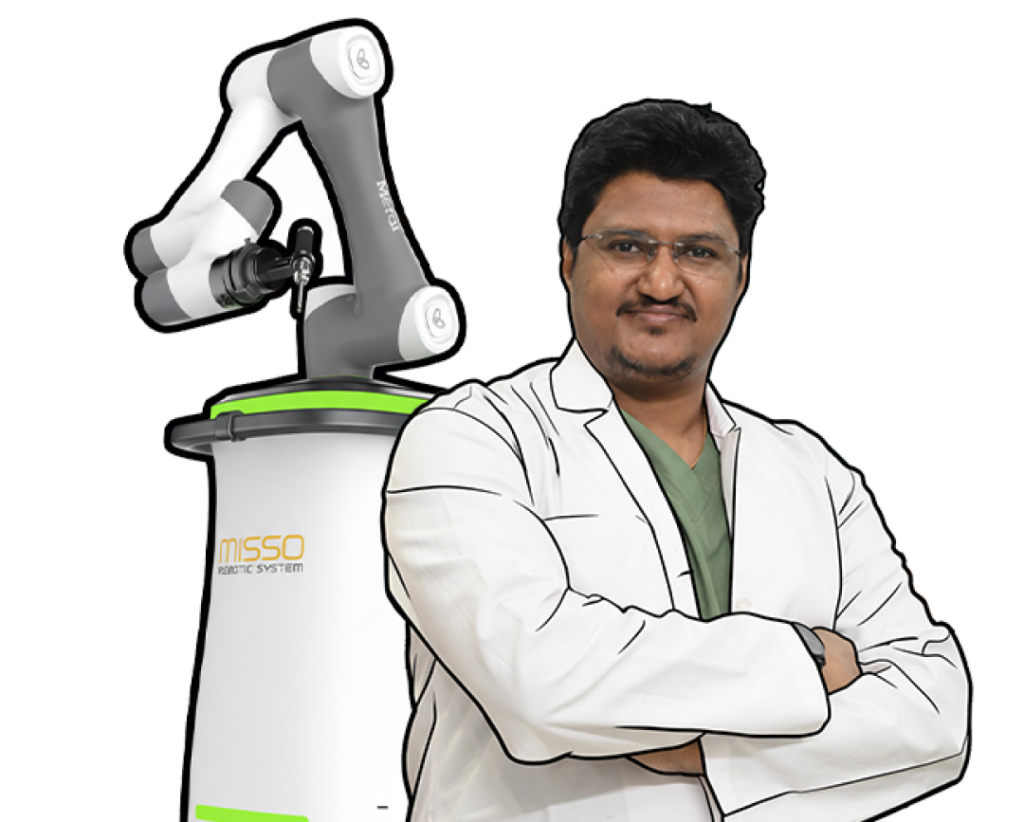
Dr. Sukesh Reddy P: MS Orthopaedics · Robotic Surgeon · Fathima Multispeciality Hospital, Warangal
Robotic Surgery Knee Replacement Sports Injuries
Fathima Multispeciality Hospital in Hanamkonda, Warangal is bringing metro-level orthopaedic care to the people of Telangana. If you’ve been told you need knee surgery and hesitated because of distance or quality concerns — you no longer have to travel to Hyderabad or beyond.
Led by Dr. Sukesh Reddy P, our robotic knee replacement programme uses state-of-the-art surgical robots that offer:
Don’t wait for the pain to worsen. Book a consultation with Dr. Sukesh Reddy P today.
📍 H No 1-1-1106, Beside Over Bridge, Sidharthnagar, Street No 7, Hanamkonda, Telangana – 506004
📞 +91 94947 32200
1Q: How do I know if my knee pain is arthritis or a ligament injury?
Ans: Knee pain caused by arthritis usually develops slowly with stiffness and swelling, while ligament injuries often happen suddenly due to trauma or sports activity. For an accurate diagnosis, consult an orthopedic specialist like Dr. Sukesh Reddy P at Fathima Hospitals, Hanamkonda, who may recommend tests like X-rays or MRI.

MS Orthopaedics · Robotic Surgeon
H No 1-1-1106, Beside Over Bridge Sidharthnagar, Street No 7, Hanamkonda, Telangana - 506004