
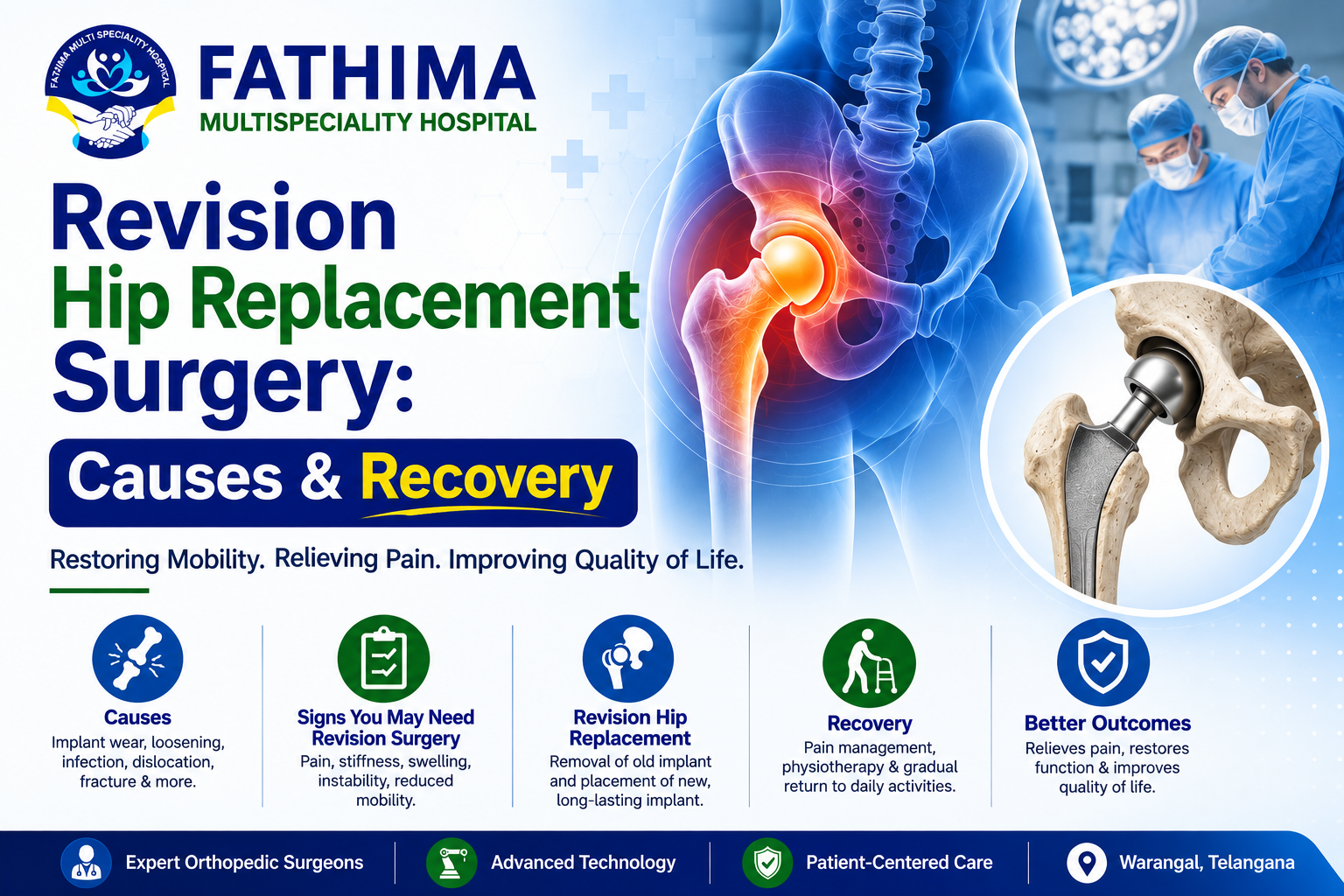
Revision Hip Replacement Surgery: Causes & Recovery
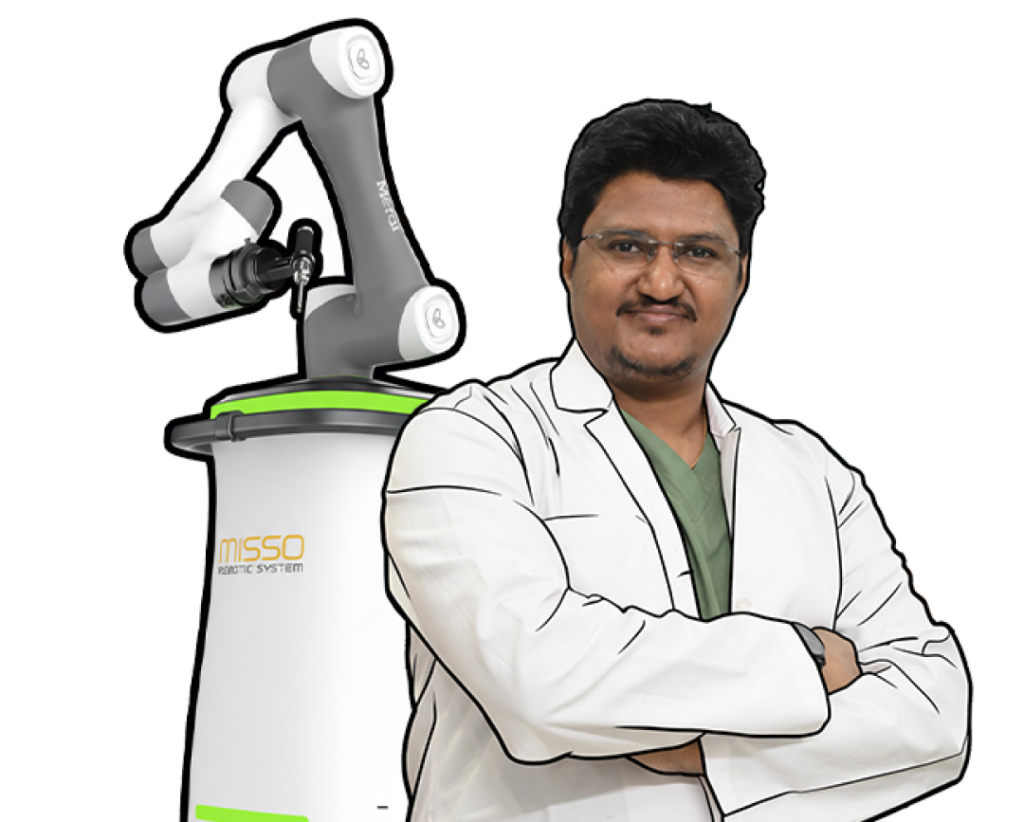
Torn ACL? Fathima Multispeciality Hospital, Warangal offers expert arthroscopic ACL reconstruction under Dr. Sukesh Reddy (MS Ortho) with advanced robotic-assisted orthopaedic technology.
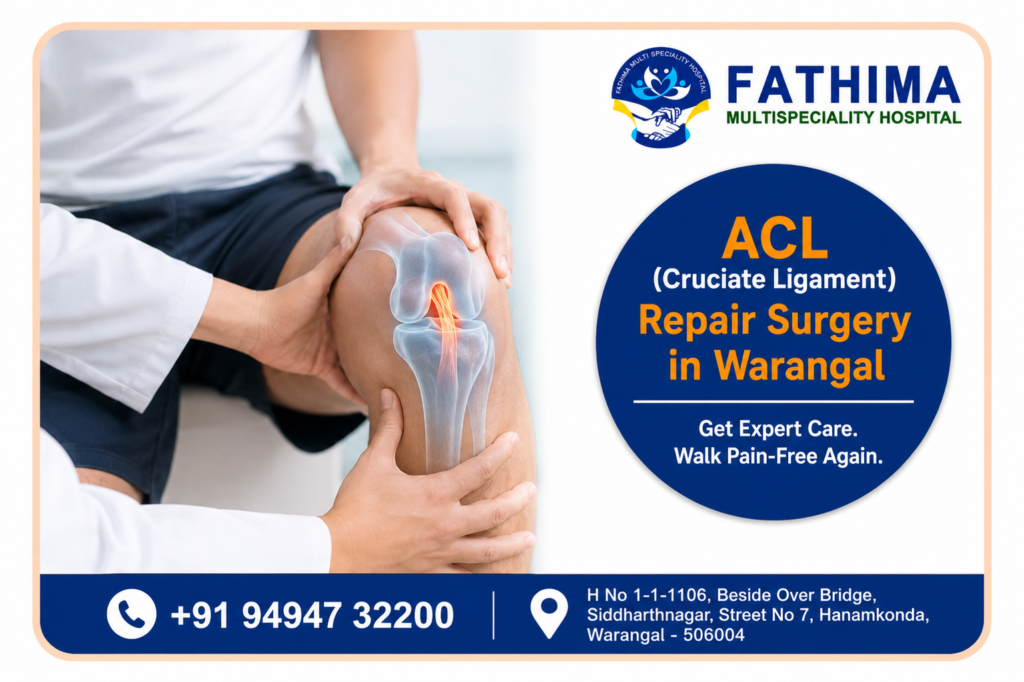
The Anterior Cruciate Ligament (ACL) is one of four main ligaments that stabilize the knee. When it tears — usually from a sports injury, a fall, or a twisting accident — the knee becomes unstable and surgery is often needed to restore normal movement. ACL repair (reconstruction) is a keyhole, arthroscopic surgery that rebuilds the torn ligament using a tissue graft. At Fathima Multispeciality Hospital in Warangal, this procedure is performed by Dr. Sukesh Reddy P (MS Orthopaedics) using minimally invasive arthroscopic technique, backed by the region’s advanced robotic-assisted orthopaedic infrastructure.
The anterior cruciate ligament runs diagonally through the middle of the knee, connecting the thigh bone (femur) to the shin bone (tibia). Its job is to stop the shin from sliding too far forward and to keep the knee stable during sudden stops, pivots, and jumps.
ACL injuries commonly happen during:
Because the ACL has very limited natural blood supply, a fully torn ligament does not heal on its own — surgical reconstruction is usually required to regain stability, especially for active or working-age patients.
Signs You May Have a Torn ACL
If you notice these symptoms after a fall, sports injury, or accident, an orthopaedic evaluation is recommended before the knee is used for weight-bearing activity again.
Orthopaedic surgeons grade ligament injuries from I to IV based on severity:
Grade | Description | Typical Treatment |
Grade I–II | Mild to moderate stretching/partial tear | Rest, bracing, physiotherapy |
Grade III–IV | Complete or near-complete tear | Arthroscopic ACL reconstruction surgery |
A physical examination, MRI, and consultation with an orthopaedic surgeon confirm the grade and the right treatment path. At Fathima Multispeciality Hospital, this evaluation is done directly by Dr. Sukesh Reddy P, who has an MS in Orthopaedics.
i. How ACL Reconstruction Surgery Works
ACL surgery is performed as arthroscopic (keyhole) surgery, not open surgery. This means:
Because it’s minimally invasive, patients generally experience less post-operative pain, smaller scars, and a faster return to daily activity compared with traditional open knee surgery.
Recovery timelines vary by patient and graft type, but a general guide looks like this:
Following your surgeon’s rehabilitation plan closely is the single biggest factor in a successful long-term outcome.
If you’re experiencing knee instability, swelling, or a suspected ligament injury, early evaluation leads to better outcomes. Consult Dr. Sukesh Reddy P at Fathima Multispeciality Hospital, Hanamkonda, Warangal.
Call for Appointment: +91 94947 32200
Address: H No 1-1-1106, Beside Over Bridge, Sidharthnagar, Street No 7, Hanamkonda, Telangana – 506004
Frequently Asked Questions (FAQ’s)
1Q: Is ACL surgery painful?
Ans: The arthroscopic technique used at Fathima Multispeciality Hospital involves small incisions, which significantly reduces post-operative pain compared to open surgery. Pain is managed with medication in the first few days and typically eases as physiotherapy begins.
2Q: How long does ACL reconstruction surgery take?
Ans: The procedure usually takes about 1–2 hours, depending on the complexity of the tear and the graft technique used.
H No 1-1-1106, Beside Over Bridge Sidharthnagar, Street No 7, Hanamkonda, Telangana - 506004