
What Is the Biggest Complaint After Knee Replacement? | Dr. Sukesh Reddy P, Warangal
What is the biggest complaint after knee replacement? Learn why pain and stiffness occur, recovery tips, and warning signs from Dr. Sukesh Reddy P, Warangal
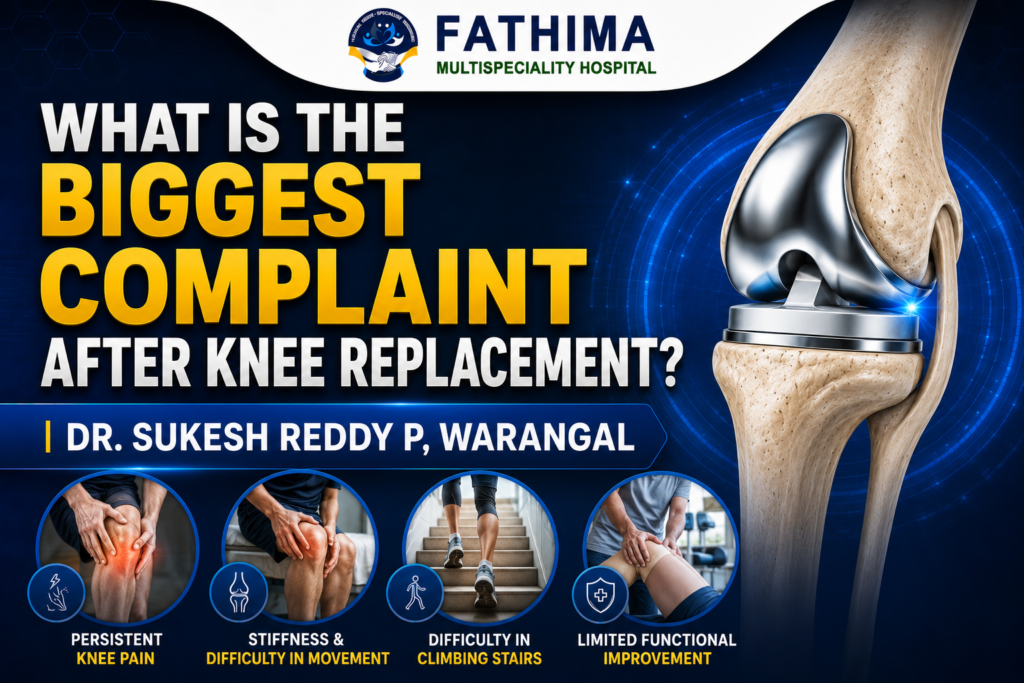
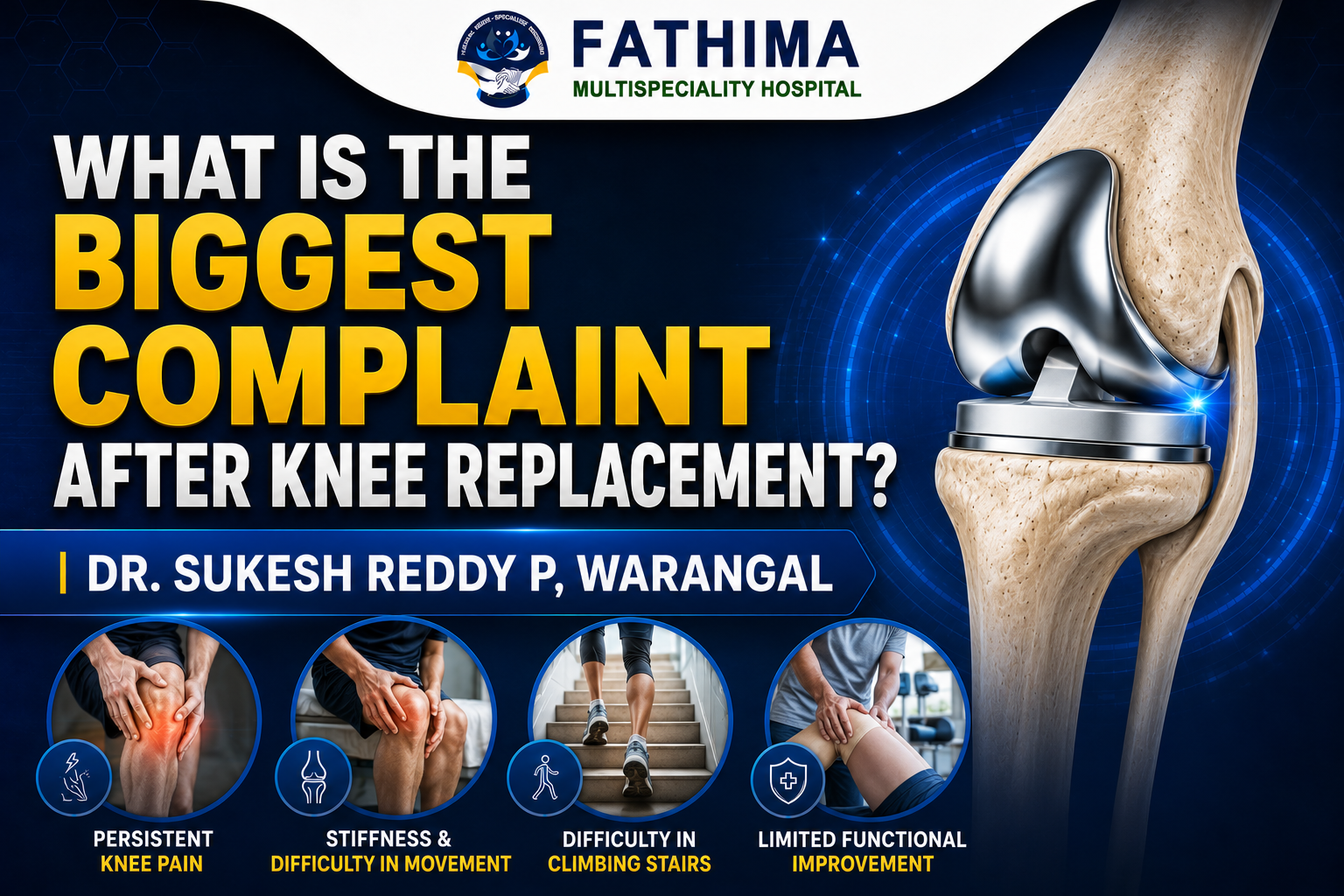
The biggest complaint after knee replacement is temporary pain and stiffness during recovery. This happens because the surrounding muscles, ligaments, and soft tissue are still healing even though the damaged joint has been replaced. According to Dr. Sukesh Reddy P (MS Orthopaedics) at Fathima Multispeciality Hospital, Warangal, these symptoms are a normal part of healing and typically improve steadily over 6–12 weeks with consistent physiotherapy.
Living with chronic knee pain makes even ordinary tasks feel difficult — climbing stairs, walking to the market, or standing for a family function. For many patients, knee replacement becomes the most effective option once medication and physiotherapy stop providing lasting relief. But before surgery, one question comes up again and again: what actually happens afterward, and what’s the most common complaint?
Understanding this upfront helps patients prepare mentally and physically — and avoid unnecessary worry when normal healing symptoms show up.
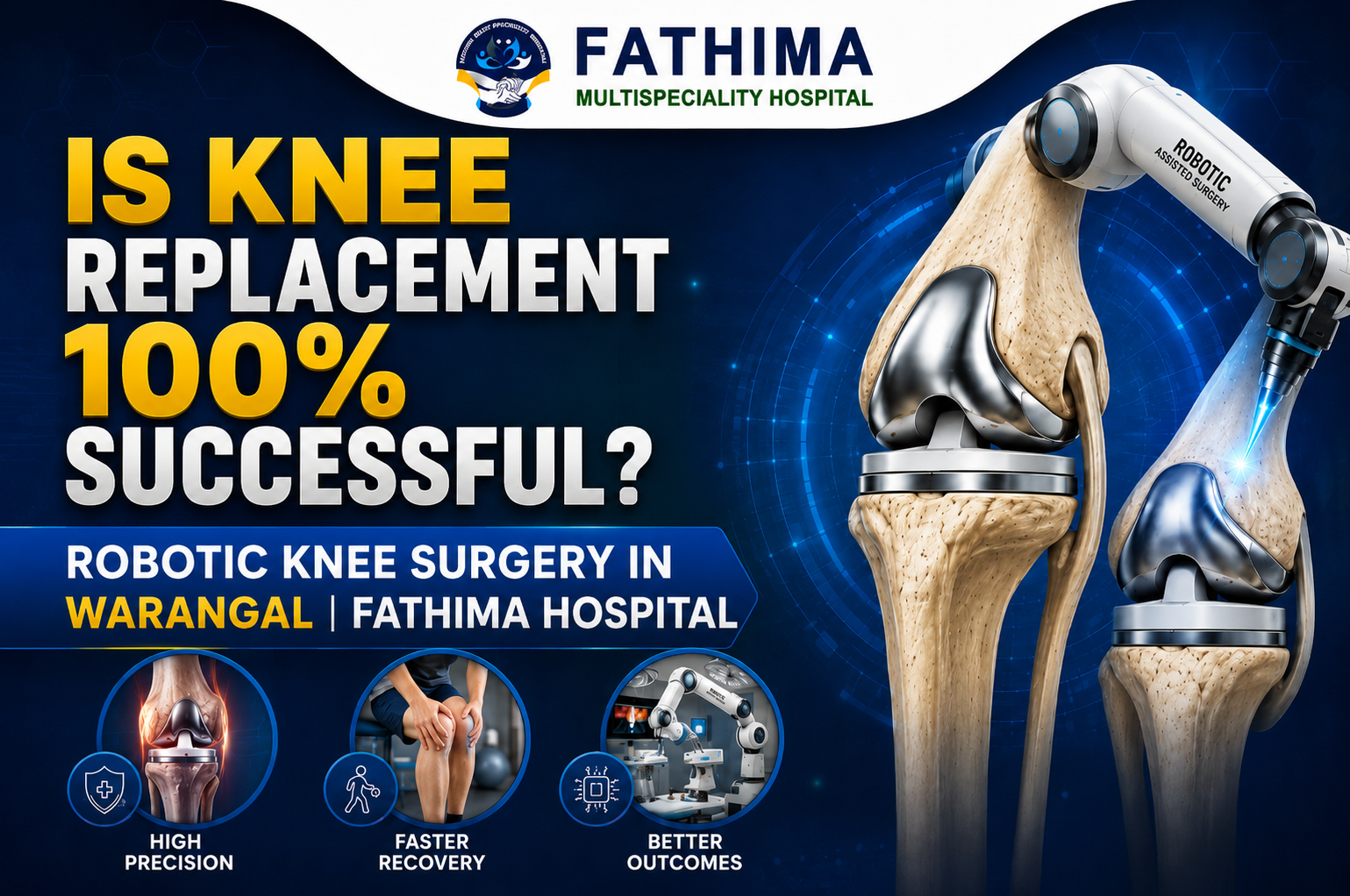
If you’re still deciding whether surgery is right for you, it’s worth reading our related guide, Is Knee Replacement 100% Successful?, which covers success rates and what influences outcomes.
The most common complaint is pain and stiffness during the recovery period.
Many patients expect to wake up from surgery completely pain-free. In reality, while the damaged joint itself has been replaced, the muscles, ligaments, tendons, and soft tissue around it still need time to heal — and the body is simultaneously adjusting to the new implant.
Common early symptoms include:
These are considered a normal part of recovery and generally improve steadily with physiotherapy and consistent follow-up care.
Pain after surgery doesn’t mean something went wrong. In fact, mild to moderate pain during healing is expected.
The Body Needs Time to Heal
Surgery triggers a natural inflammatory healing response. Tissue around the new joint swells as it repairs itself, causing temporary soreness.
Muscles Are Often Weak Beforehand
Patients with long-standing knee arthritis often reduce activity to avoid pain, which weakens the surrounding muscles over time. After surgery, physiotherapy is what rebuilds that strength.
Swelling Creates Tightness
Fluid buildup around the joint can make the knee feel heavy or tight. Ice therapy, leg elevation, and short walks are simple ways to help manage this.
Scar Tissue Affects Flexibility
As the incision heals, scar tissue forms naturally. Without regular stretching and physiotherapy, this can limit flexibility — which is why Dr. Sukesh Reddy P encourages patients to start rehabilitation as early as safely possible.
Yes — stiffness is one of the most common complaints in the first few months. Patients often notice it while:
Stiffness typically eases with consistent physiotherapy and home exercises. Patients who stay committed to their rehab plan tend to regain mobility faster than those who skip sessions.
Other Common Complaints After Knee Replacement
Swelling Around the Knee
Normal during healing and may last several weeks. Helpful measures include:
Difficulty Sleeping
Pain, swelling, and finding a comfortable position can disturb sleep early on. This typically improves as healing progresses.
Clicking or Popping Sounds
This often worries patients, but mild clicking without pain or instability is common — artificial joints simply move differently from a natural knee.
Numbness Near the Scar
Small areas of numbness can occur if minor skin nerves are affected during surgery. Sensation often improves over time, though a small numb patch may remain permanently without affecting how the knee functions.
Recovery differs from patient to patient, but a few habits consistently make the process smoother:
i. Stay consistent with physiotherapy — the single biggest factor in regaining strength and flexibility.
ii. Keep moving safely — gentle, regular walking improves circulation and reduces stiffness without overexertion.
iii. Maintain a healthy weight — less stress on the new joint supports both recovery and implant longevity.
iv. Eat a nutrient-rich diet — protein, vitamins, and minerals support tissue healing.
v. Never skip follow-up visits — regular check-ins with your surgeon catch issues early, before they become serious.
Temporary pain and stiffness are expected, but certain symptoms need immediate medical attention. Contact Dr. Sukesh Reddy P or your surgeon right away if you notice:
Early attention to these warning signs can prevent complications and protect your recovery.
A successful knee replacement depends on far more than the surgery itself — accurate diagnosis, surgical precision, personalized rehabilitation, and long-term follow-up all shape the outcome.
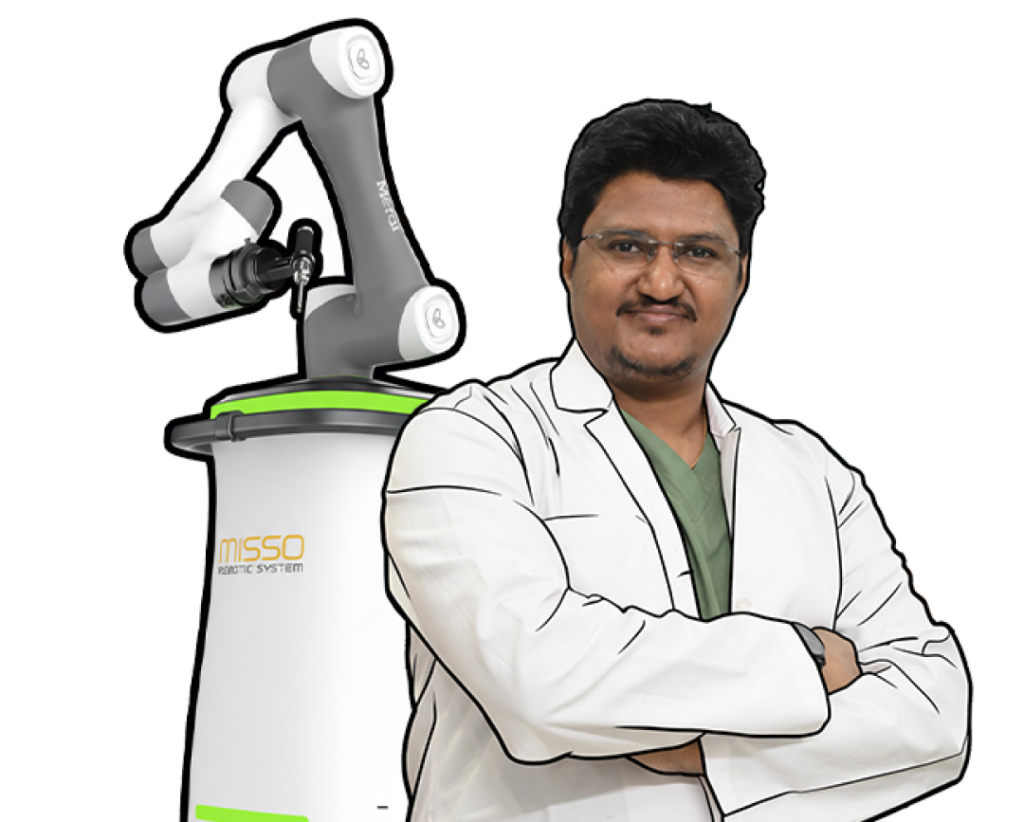
At Fathima Multispeciality Hospital, Warangal, patients are cared for by Dr. Sukesh Reddy P, an experienced orthopaedic surgeon known for Robotic Knee Replacement Surgery — the first program of its kind in Warangal. Backed by a ₹7 crore investment in advanced surgical technology, the hospital’s approach focuses on precision during surgery and structured, personalized rehabilitation afterward, so patients aren’t left guessing what a “normal” recovery should feel like.
Google Map URL: https://share.google/v25g9t45RP5q2MWck
Frequently Asked Questions (FAQ’s)
1Q: What is the biggest complaint after knee replacement?
Ans: Temporary pain and stiffness during recovery — this is the most reported complaint and usually improves with physiotherapy and time.
2Q: Who treats knee replacement complications in Warangal?
Ans: Dr. Sukesh Reddy P (MS Orthopaedics) at Fathima Multispeciality Hospital evaluates and manages post-surgical concerns, including pain, stiffness, and recovery planning.
H No 1-1-1106, Beside Over Bridge Sidharthnagar, Street No 7, Hanamkonda, Telangana - 506004