
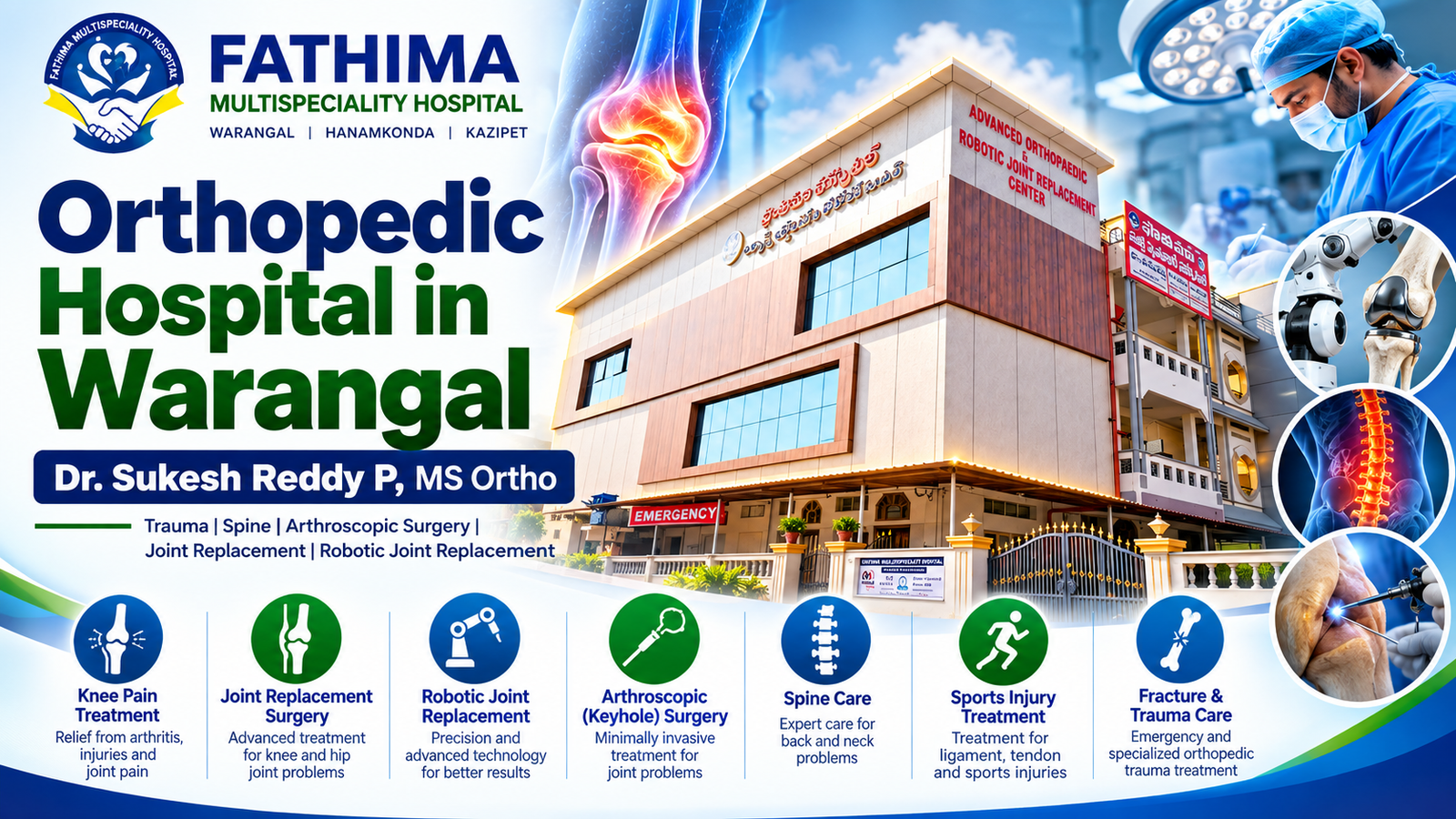
Orthopedic Hospital in Warangal | Dr. Sukesh Reddy P, MS Ortho
Slip disc, sciatica or spinal stenosis? Learn how keyhole spine surgery works and what recovery looks like. Book with Dr. Sukesh Reddy P, Warangal.
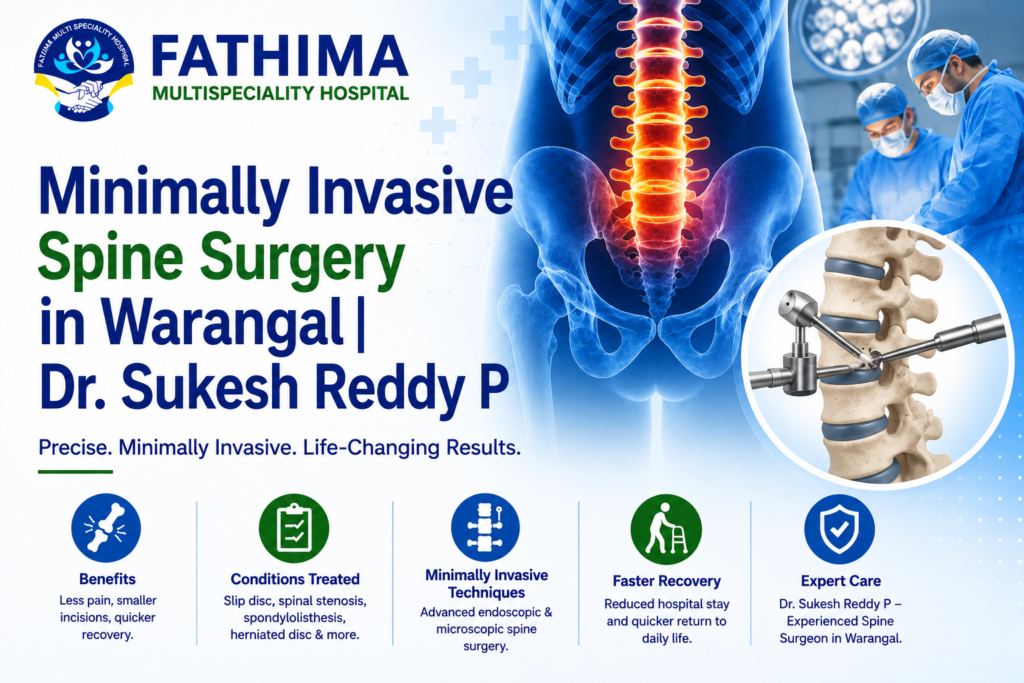
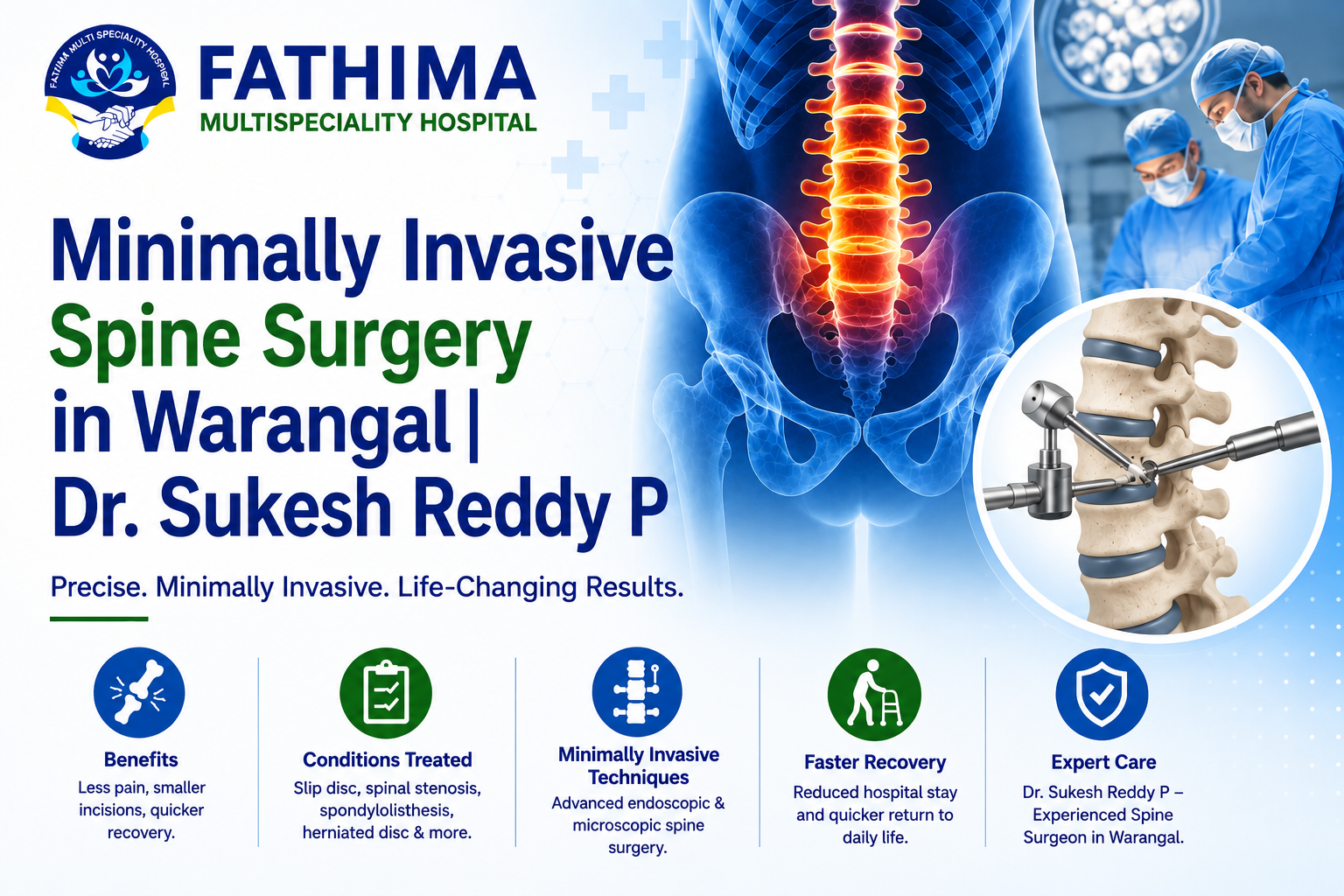
Minimally invasive spine surgery (MISS) treats spinal problems through small incisions, using a camera and fine instruments instead of a large opening in the back. Because less muscle is disturbed, many suitable patients have less pain after surgery, lose less blood, and get moving sooner than with traditional open surgery. At Fathima Multispeciality Hospital, Hanamkonda, orthopedic and spine surgeon Dr. Sukesh Reddy P assesses each patient to decide whether a minimally invasive approach is the right option.
Traditional spine surgery often means a long cut along the back and moving the muscles aside to reach the spine. Minimally invasive surgery takes a different route. The surgeon makes one or a few small openings, places a narrow tube through them, and works through that channel while watching a magnified live image on a screen.
The spine is reached with much less disturbance to the muscles and ligaments that support it. This is the main reason recovery is often smoother.
Procedures that can be done this way include:
Not every procedure can be done this way for every patient. The choice depends on your diagnosis, scan findings, and overall health.
Surgeons may consider a minimally invasive approach for:
Condition | What it means |
Herniated or slipped disc | Disc material presses on a nerve, causing leg or arm pain |
Spinal stenosis | The canal narrows and squeezes the spinal cord or nerves |
Sciatica that persists | Shooting leg pain that does not improve with treatment |
Cervical spondylosis | Age-related wear in the neck |
Spondylolisthesis | One vertebra slips over the one below |
Degenerative disc disease | Discs lose height and cushioning over time |
Vertebral compression fractures | Often related to osteoporosis |
Surgery is generally considered after conservative care has been tried, such as medication, physiotherapy, posture correction, and activity changes. Emergency signs are the exception (see the warning signs section below).
Factor | Minimally Invasive | Open Surgery |
Incision size | Small | Larger |
Muscle disturbance | Limited | More extensive |
Blood loss | Usually lower | Usually higher |
Pain after surgery | Often less | Often more |
Hospital stay | Often shorter | Often longer |
Best suited for | Selected, localised problems | Complex deformity or extensive disease |
Minimally invasive surgery is not automatically “better” for everyone. Complicated deformities, multi-level disease, or certain tumours may still need open surgery for safe and complete correction. A good surgeon recommends the approach that fits your spine, not the one that sounds most modern.
Recovery differs by procedure and by patient, so treat these as general patterns rather than promises.
Physiotherapy is a key part of results. Skipping it is one of the most common reasons people struggle after otherwise successful surgery.
Meet Your Spine Surgeon: Dr. Sukesh Reddy P
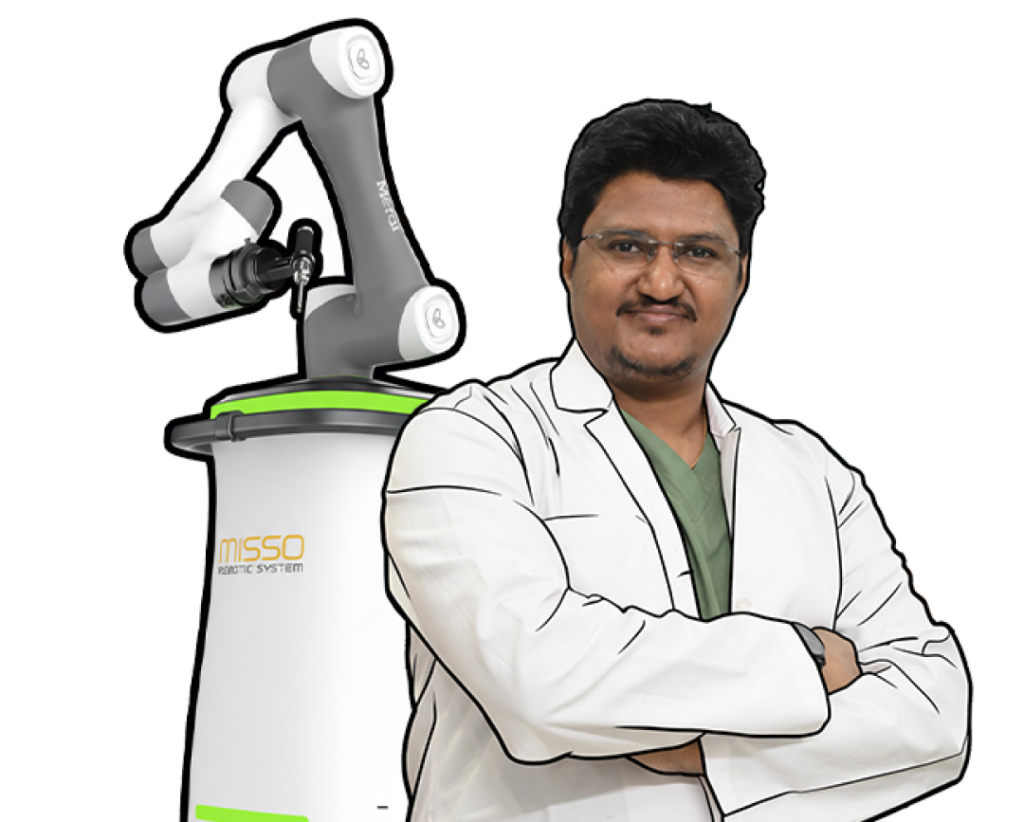
Dr. Sukesh Reddy P is an orthopedic surgeon at Fathima Multispeciality Hospital, Hanamkonda, with more than 13 years of experience. He holds an MBBS and MS (Orthopaedics) with a fellowship in joint replacement, and his areas of practice include spine care, trauma, arthroscopic (keyhole) surgery, and joint replacement.
Patients consult him for back pain, disc problems, sciatica, spinal ailments, and other bone and joint conditions. His approach centres on careful diagnosis, clear explanation of options, and choosing the least invasive treatment that will safely solve the problem.
When Should You See a Spine Specialist?
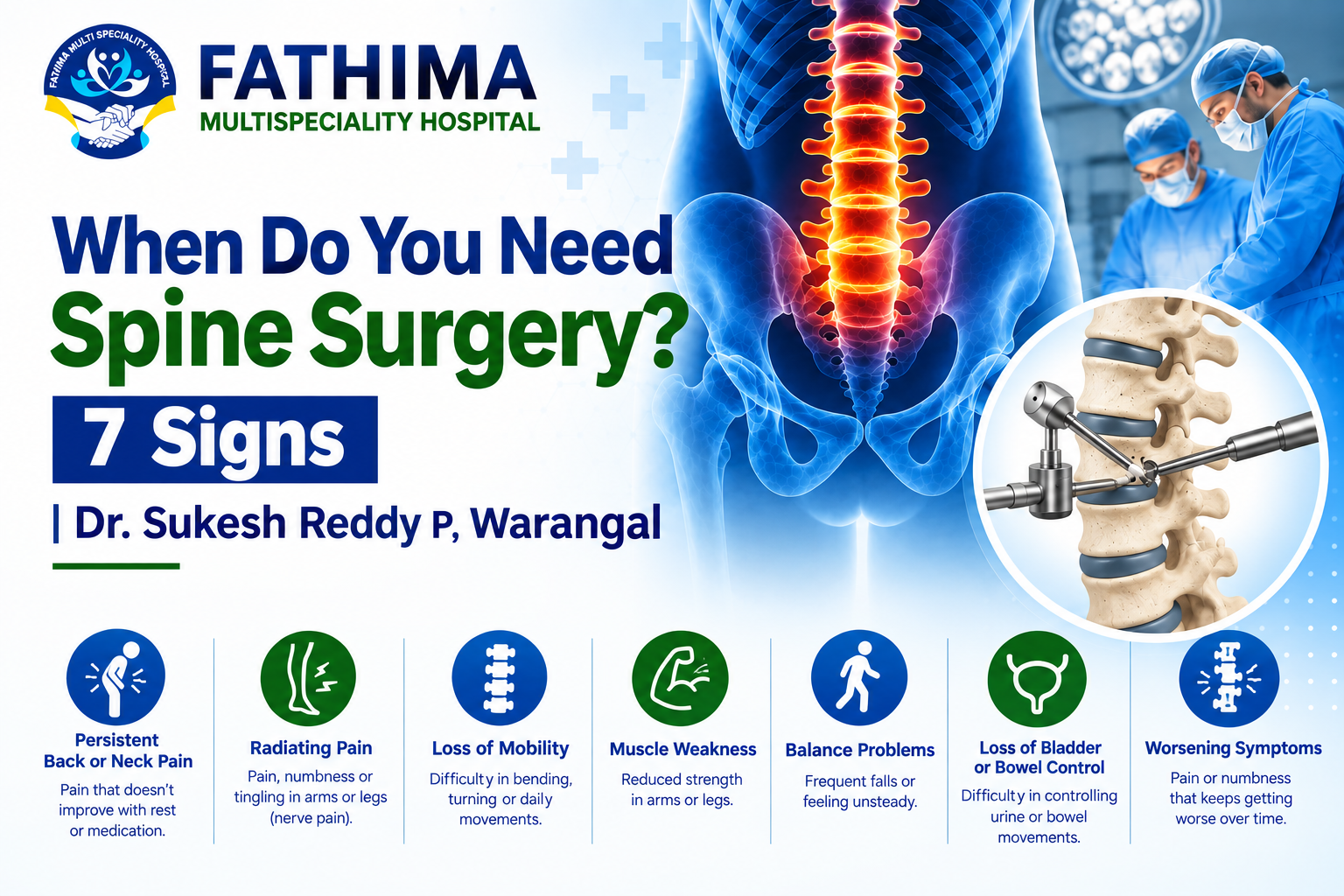
Book a consultation if you have:
Seek emergency care immediately if you have sudden leg weakness, numbness in the groin or inner thighs, or loss of control over bladder or bowels. These can signal serious nerve compression that needs urgent treatment.
📍 Fathima Multispeciality Hospital, Hanamkonda, Warangal
📞+9194947 32200
🌐 fathimahospitals.in
H No 1-1-1106, Beside Over Bridge Sidharthnagar, Street No 7, Hanamkonda, Telangana - 506004