
Ortho Hospital in Hanamkonda | Fathima Multispeciality Hospital
Complete guide to knee replacement surgery — when it’s needed, robotic vs. traditional techniques, recovery timeline & risks. Expert robotic knee care in Warangal.
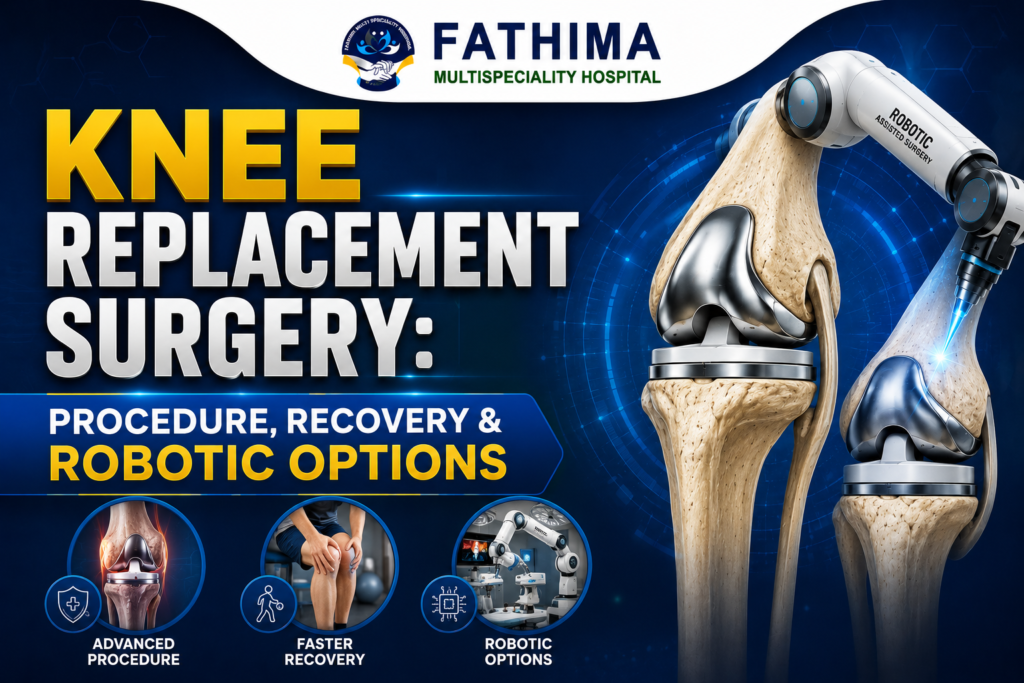
Knee replacement surgery (knee arthroplasty) removes damaged cartilage and bone from a worn knee joint and replaces it with an artificial implant made of metal, plastic, or ceramic. It is recommended when chronic knee pain from arthritis or injury no longer responds to medication, injections, or physiotherapy. The procedure relieves pain, restores mobility, and helps patients return to a more active, independent life.
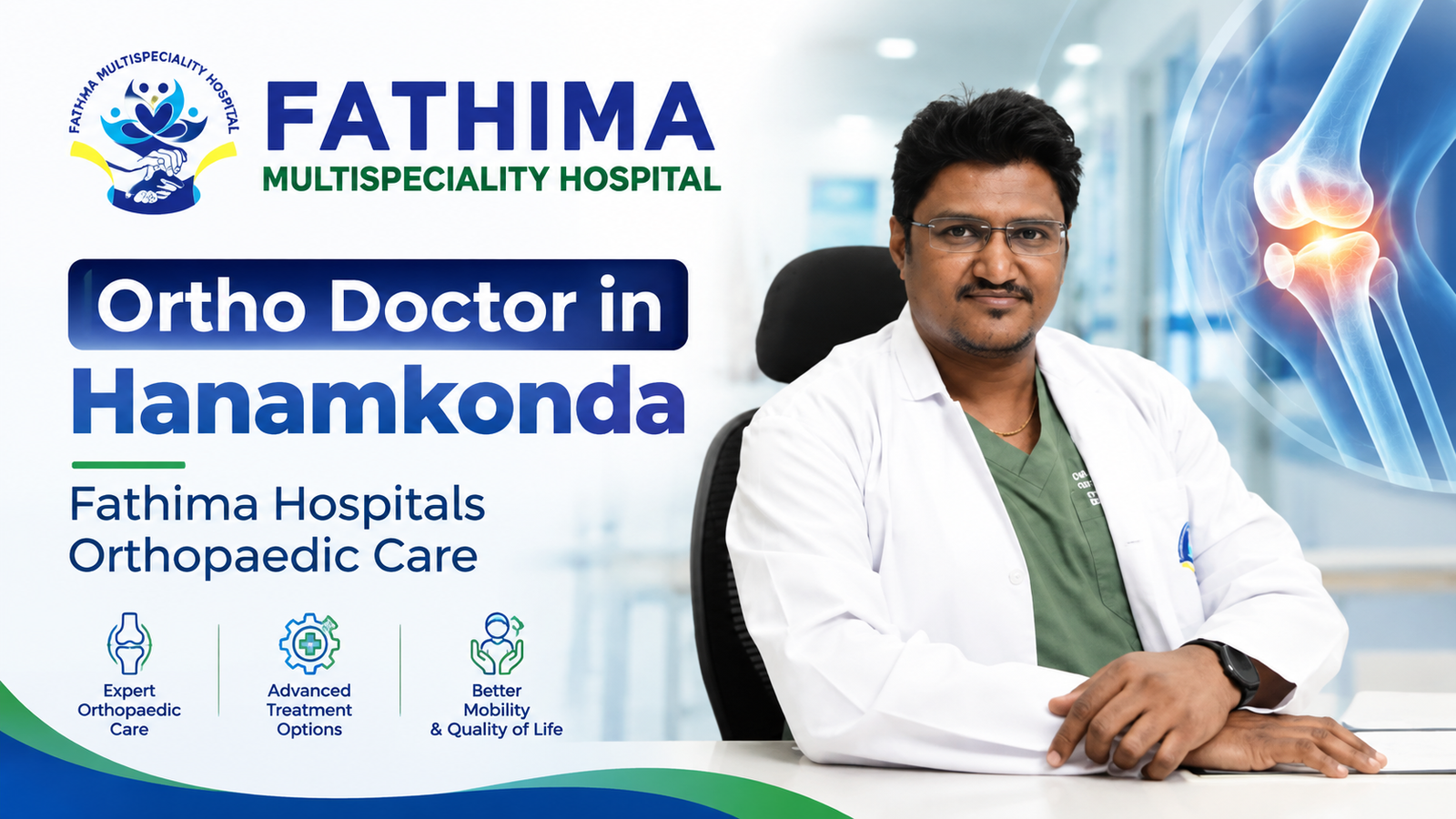
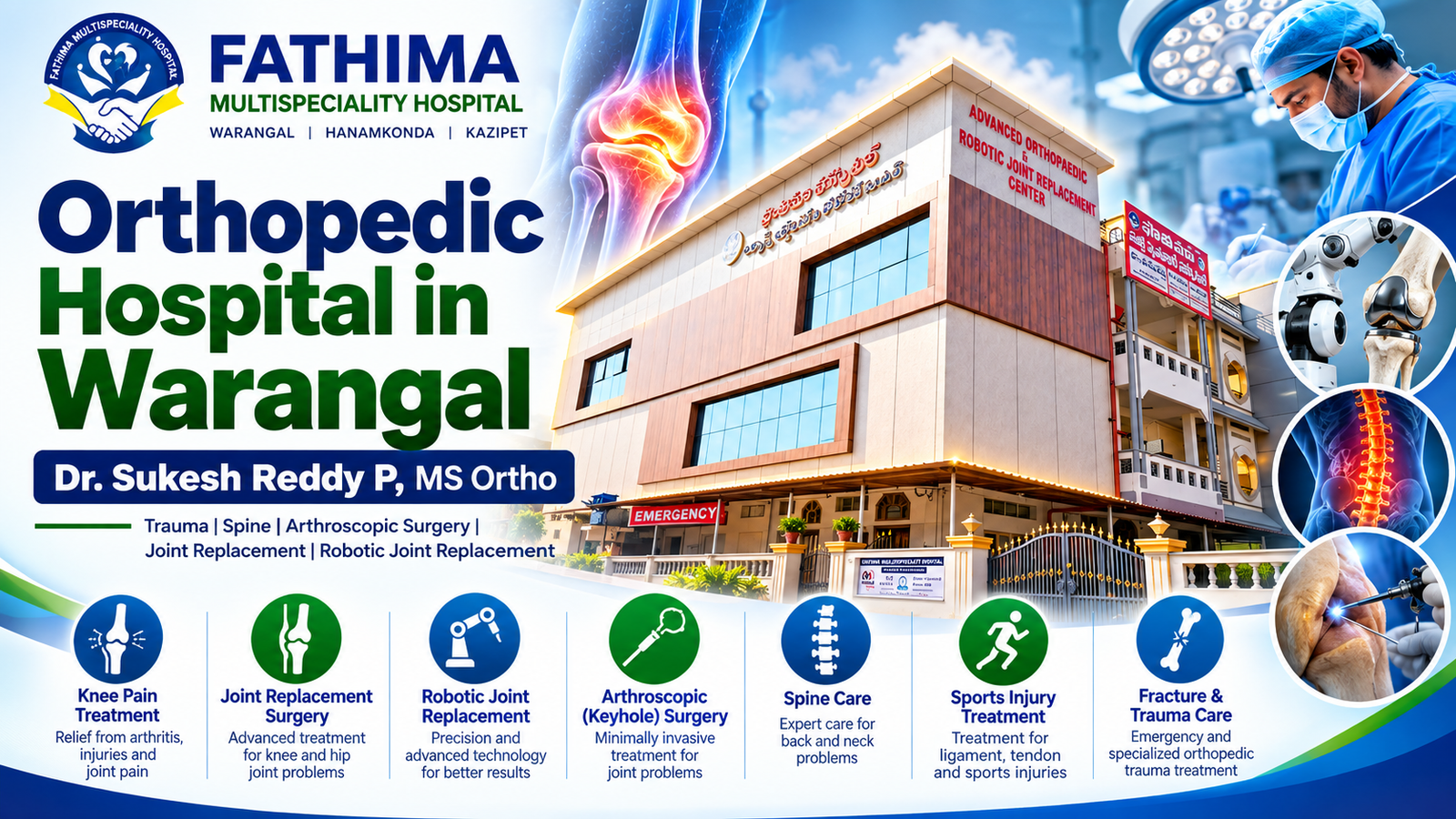
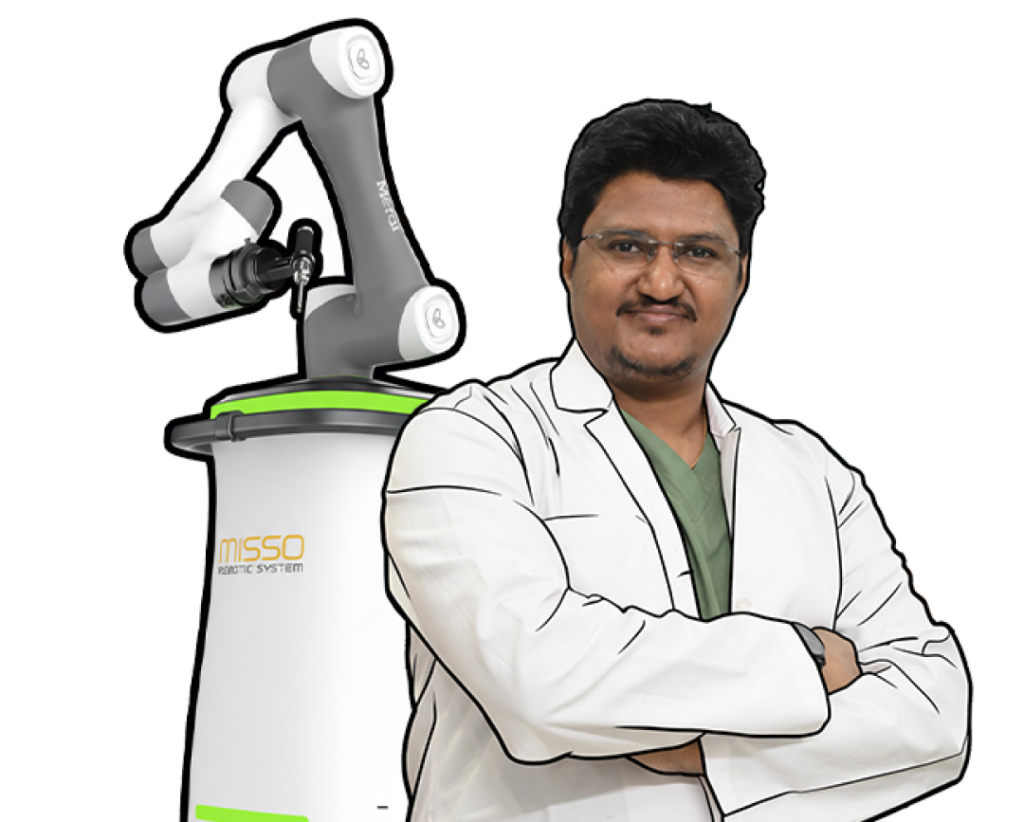
At Fathima Multispeciality Hospital, Warangal’s leading center for orthopaedic care, patients have access to advanced robotic knee replacement surgery — a technology-driven approach led by Dr. Sukesh Reddy P (MS Orthopaedics) that improves precision and speeds up recovery.
Knee replacement is generally recommended when:
Age is not the deciding factor — the decision depends on the severity of joint damage, pain levels, and how much the condition affects quality of life. Surgery is typically considered only after conservative treatments have failed.
There are three main approaches, and the right one depends on how much of the joint is damaged:
Type | What It Involves | Best Suited For |
Total Knee Replacement (TKR) | The entire knee joint surface is replaced with prosthetic components | Widespread arthritis affecting the whole joint |
Partial Knee Replacement | Only the damaged compartment of the knee is replaced | Localized damage in one part of the joint |
Robotic-Assisted Knee Replacement | A robotic arm assists the surgeon with precise bone cuts and implant alignment, in either total or partial procedures | Patients seeking maximum accuracy and faster recovery |
Traditional (open) knee replacement relies on the surgeon’s manual measurements and larger incisions to access, cut, and reshape the bone before fitting the implant. It’s a well-established technique, but the larger incision and manual bone-cutting can mean more tissue disruption and a longer hospital stay.
Robotic knee replacement uses a CT-based 3D model of the patient’s own knee anatomy to plan the surgery in advance. During the operation, the surgeon controls the robotic arm at every step — it does not move or cut on its own — while the system guides bone cuts and implant positioning within a fraction of a millimeter of the plan. This typically results in:
Fathima Multispeciality Hospital was the first hospital in Warangal to introduce robotic knee replacement surgery, backed by a ₹7 crore investment in advanced medical technology, bringing metro-level surgical precision closer to patients in the region.
Recovery depends on the technique used and the patient’s overall health, but a general timeline looks like this:
Consistent physiotherapy, wound care, and following the surgeon’s rehabilitation plan are key to a smooth recovery and long-term implant success.
Risks and Benefits of Knee Replacement Surgery
Benefits:
Risks (uncommon but possible):
Choosing an experienced surgical team and a hospital with modern infrastructure — including robotic-assisted technology — significantly reduces these risks and improves outcomes.
If chronic knee pain is limiting your daily life, it may be time to consult an orthopaedic specialist. Fathima Multispeciality Hospital offers advanced robotic knee replacement surgery under the care of Dr. Sukesh Reddy P (MS Orthopaedics), combining surgical precision with compassionate, patient-first care.
📍 H No 1-1-1106, Beside Over Bridge, Sidharthnagar, Street No 7, Hanamkonda, Telangana – 506004
📞 +91 94947 32200
🌐 fathimahospitals.in
H No 1-1-1106, Beside Over Bridge Sidharthnagar, Street No 7, Hanamkonda, Telangana - 506004