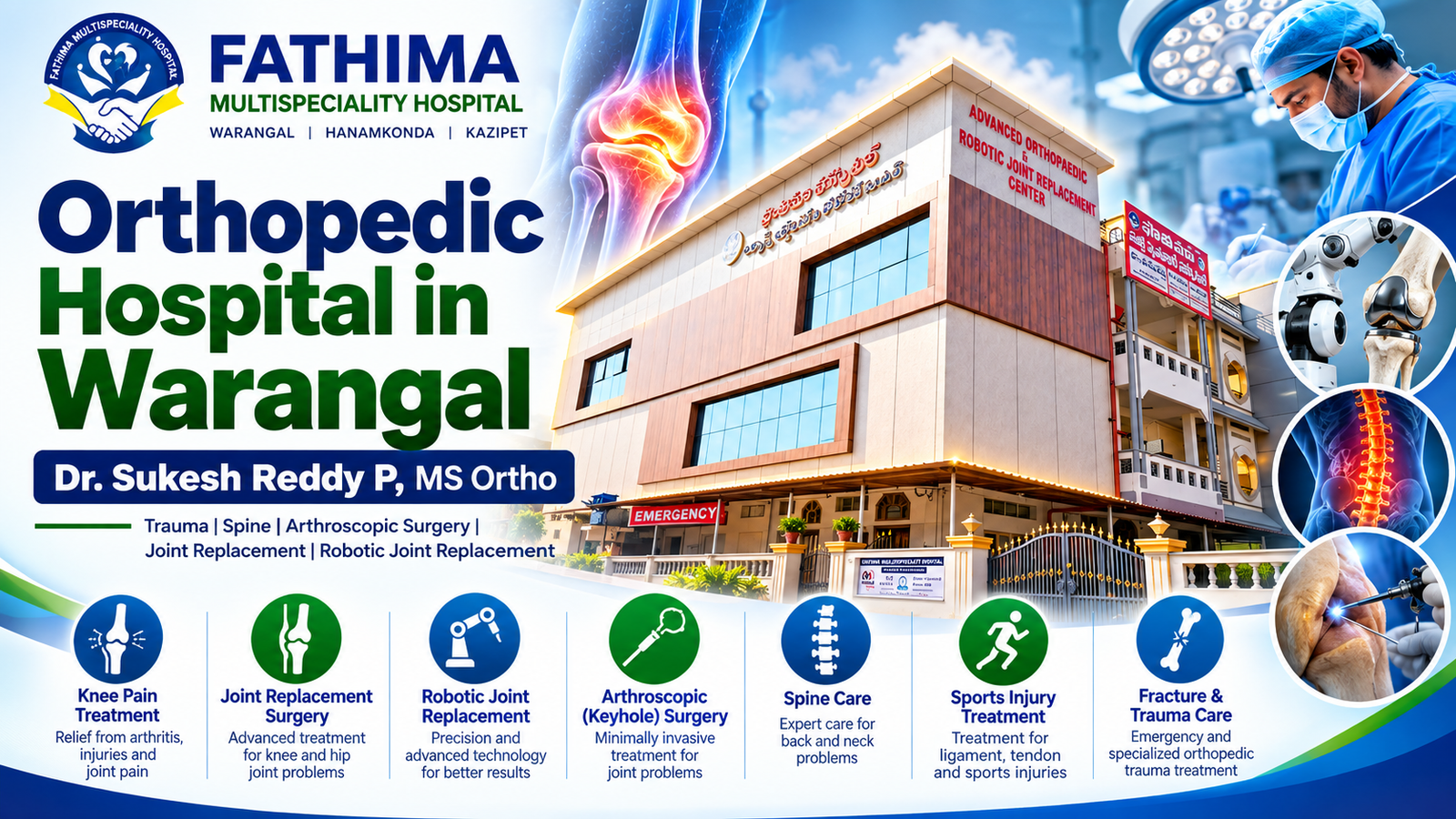

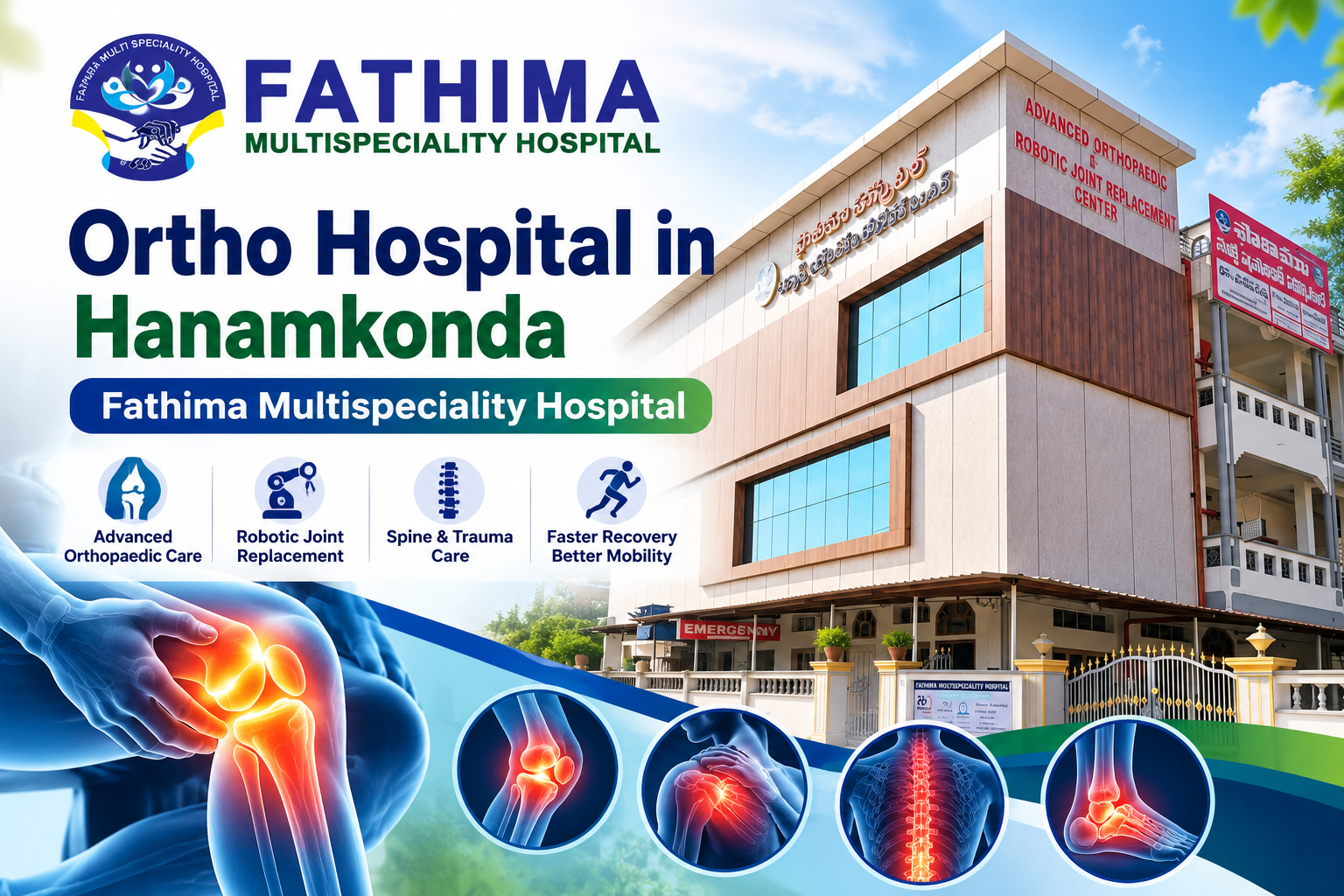
Ortho Hospital in Hanamkonda | Fathima Multispeciality Hospital
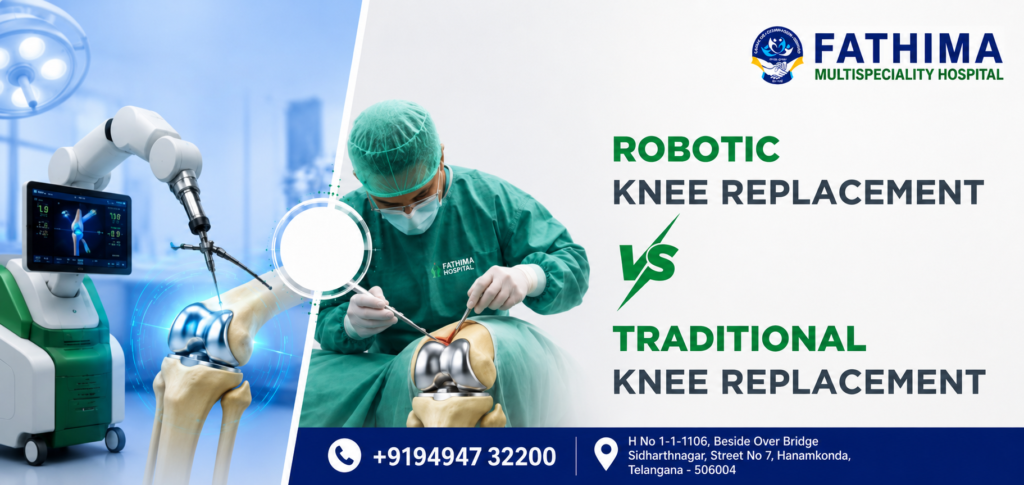
Best Joint Replacement Hospital in Warangal
Chronic knee arthritis can silently steal the life you love — the morning walks, climbing stairs without wincing, sitting on the floor with your grandchildren. For thousands of patients across Telangana, knee replacement surgery has been the turning point that gave that life back.
But today’s patients are more informed than ever, and before agreeing to surgery, they ask a very reasonable question:
“Is robotic knee replacement better than traditional knee replacement — and which one is right for me?”
There is no single answer that fits every patient. Both approaches aim to relieve pain, restore joint function, and help people move freely again. What separates them is how that goal is achieved — the tools used, the level of precision delivered, and how well the surgery adapts to your unique anatomy.
As a robotic joint replacement surgeon at Fathima Multispeciality Hospital, Warangal, I want to give you an honest, clear picture of both options so you can make a confident, informed decision.
Traditional knee replacement — medically known as conventional total knee arthroplasty — has a well-established track record spanning over five decades. It has helped millions of patients worldwide walk pain-free again, and it remains a highly effective treatment when performed by an experienced surgeon.
In this approach, the surgeon removes the damaged portions of the knee joint using handheld cutting instruments and pre-measured guides. A metal and plastic implant is then fixed in place to replicate the function of a healthy knee.
The success of conventional knee replacement hinges on several factors:
When these elements come together, conventional knee replacement delivers excellent outcomes for the vast majority of patients.
Robotic knee replacement represents the next generation of joint replacement surgery — one where surgical precision is enhanced by intelligent technology working alongside the surgeon.
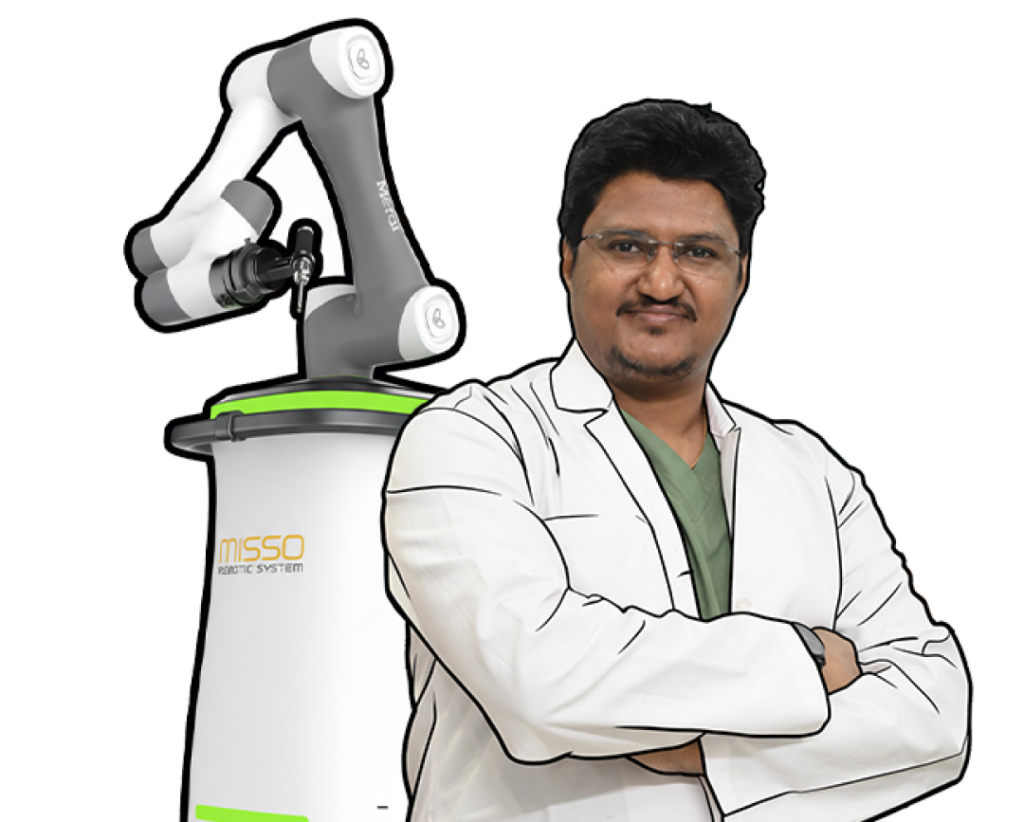
One point must be absolutely clear: the robot does not operate independently. Your surgeon is in control of every step. The robotic system functions as a highly advanced guidance tool — one that gives the surgeon real-time data, three-dimensional mapping, and precise boundaries that would be impossible to replicate with the naked eye alone.
Robotic assistance enables the surgeon to:
The outcome is a surgery that is shaped entirely around your knee — not a standardized template.
i. Pre-Surgical Planning
In conventional surgery, the plan is built on the surgeon’s experience, standard X-rays, and general measurements. This works well, but the planning is largely uniform across patients.
Robotic surgery uses CT-based imaging to generate a three-dimensional digital model of your specific knee. Dr. Sukesh Reddy P designs the entire surgical approach on this model before you enter the operating theatre — so the plan is already customized to your anatomy on the day of surgery.
ii. Surgical Precision
Conventional knee replacement in skilled hands is highly precise, but some degree of variability is inherent when using manual instruments.
Robotic-assisted surgery adds a layer of technological consistency. The system tracks instrument position in real time and alerts the surgeon if movement strays outside the planned boundaries — delivering repeatable accuracy that manual techniques cannot always guarantee.
iii. Implant Placement
How accurately the implant is seated inside the knee has a direct bearing on how well the joint functions and how long the implant lasts.
Traditional surgery places the implant using physical guides and the surgeon’s judgment. Robotic surgery confirms placement against the pre-built digital plan and allows the surgeon to make micro-corrections in real time before the implant is finally fixed.
iv. Alignment of the Joint
Proper joint alignment ensures that body weight passes evenly through the knee — reducing wear, preventing instability, and improving long-term comfort.
Conventional techniques rely on standard mechanical alignment guides. Robotic systems provide continuous, data-driven alignment feedback during surgery, helping the surgeon achieve and verify the ideal angle at every stage.
v. Personalisation
Traditional surgery uses well-tested surgical principles that produce good results for most patients.
Robotic surgery goes a step further by adapting to individual differences in bone shape, joint geometry, and movement patterns — delivering a result that is genuinely tailored to the individual rather than modelled on an average patient.
Feature | Traditional Knee Replacement | |
Surgical Planning | Patient-specific 3D planning | Experience and standard imaging |
Implant Placement | Robotic-guided precision | Manual instruments and guides |
Alignment Verification | Continuous real-time data | Standard mechanical guides |
Personalisation | Tailored to individual anatomy | Standardised approach |
Surgeon Control | Complete | Complete |
Goal | Pain relief and restored mobility | Pain relief and restored mobility |
Outcome | Improved function, faster confidence | Proven, effective results |
Both methods, when correctly applied, are designed to deliver meaningful improvements in quality of life.
Recovery is not determined by surgery alone. Several personal factors shape how quickly and fully a patient recovers:
Many patients who undergo robotic-assisted surgery report feeling more at ease during early recovery — likely due to reduced trauma to surrounding tissues. However, rehabilitation remains non-negotiable. Patients who commit fully to physiotherapy consistently achieve better outcomes, regardless of which surgical method was used.
Not necessarily.
Robotic technology offers genuine advantages in planning, alignment, and implant positioning — but the right surgical approach depends on a thorough clinical assessment. Key factors include:
Understanding Patient Expectations
Beyond clinical factors, the right approach also depends on what you want from life after surgery. A highly active person in their fifties has different goals than someone in their seventies seeking to move without pain. A thoughtful orthopaedic consultation takes all of this into account.
The growing adoption of robotic-assisted joint replacement globally reflects the tangible benefits patients and surgeons have experienced:
These advantages make robotic knee replacement particularly well-suited to patients who want the most precise outcome currently available.
Technology, however advanced, is only as effective as the surgeon using it.
Robotic systems are sophisticated instruments — but they do not replace clinical judgment, diagnostic accuracy, or the experience to handle unexpected findings during surgery. They amplify what a skilled surgeon can achieve; they do not substitute for skill itself.
Lasting surgical success depends on:
At Fathima Multispeciality Hospital, Warangal, robotic technology and surgical expertise work together — not one without the other.
For years, patients in Warangal, Hanamkonda, Karimnagar, and the surrounding districts who needed robotic orthopaedic surgery had only one option: travel to Hyderabad. That has changed.
Fathima Multispeciality Hospital has invested ₹7 Crore in advanced robotic surgical technology — bringing the same standard of care available in top metropolitan hospitals directly to Warangal. This is the largest orthopaedic technology investment of its kind in the region.
Led by Dr. Sukesh Reddy P (MS Orthopaedics), our robotic knee replacement programme follows a structured, patient-centred process:
Our goal is simple: to help every patient return to a life of movement, independence, and freedom from pain — without leaving Warangal to do it.
Both traditional and robotic knee replacement are proven, effective solutions for advanced knee arthritis. Traditional surgery has an outstanding record and continues to serve many patients well. Robotic-assisted surgery raises the bar in terms of planning precision, alignment accuracy, and personalisation.
The question is not which technique is universally superior — it is which approach best suits your specific condition, anatomy, and lifestyle goals.
Dr. Sukesh Reddy P at Fathima Multispeciality Hospital, Warangal offers expert evaluation of both options and will recommend the approach most likely to give you the best long-term outcome. The first step is a consultation.
Frequently Asked Questions (FAQ’s)
1Q: What is the difference between traditional knee replacement and robotic knee replacement in Warangal?
Ans: Traditional knee replacement uses manual surgical instruments and the surgeon’s judgment to remove damaged bone and place the implant. Robotic knee replacement, available at Fathima Multispeciality Hospital, Warangal, uses a CT-based 3D surgical plan and a robotic guidance system to place the implant with sub-millimetre precision. Dr. Sukesh Reddy P (MS Orthopaedics) leads this procedure using a ₹7 Crore robotic system — delivering better alignment, less tissue damage, and faster recovery compared to conventional surgery.
H No 1-1-1106, Beside Over Bridge Sidharthnagar, Street No 7, Hanamkonda, Telangana - 506004