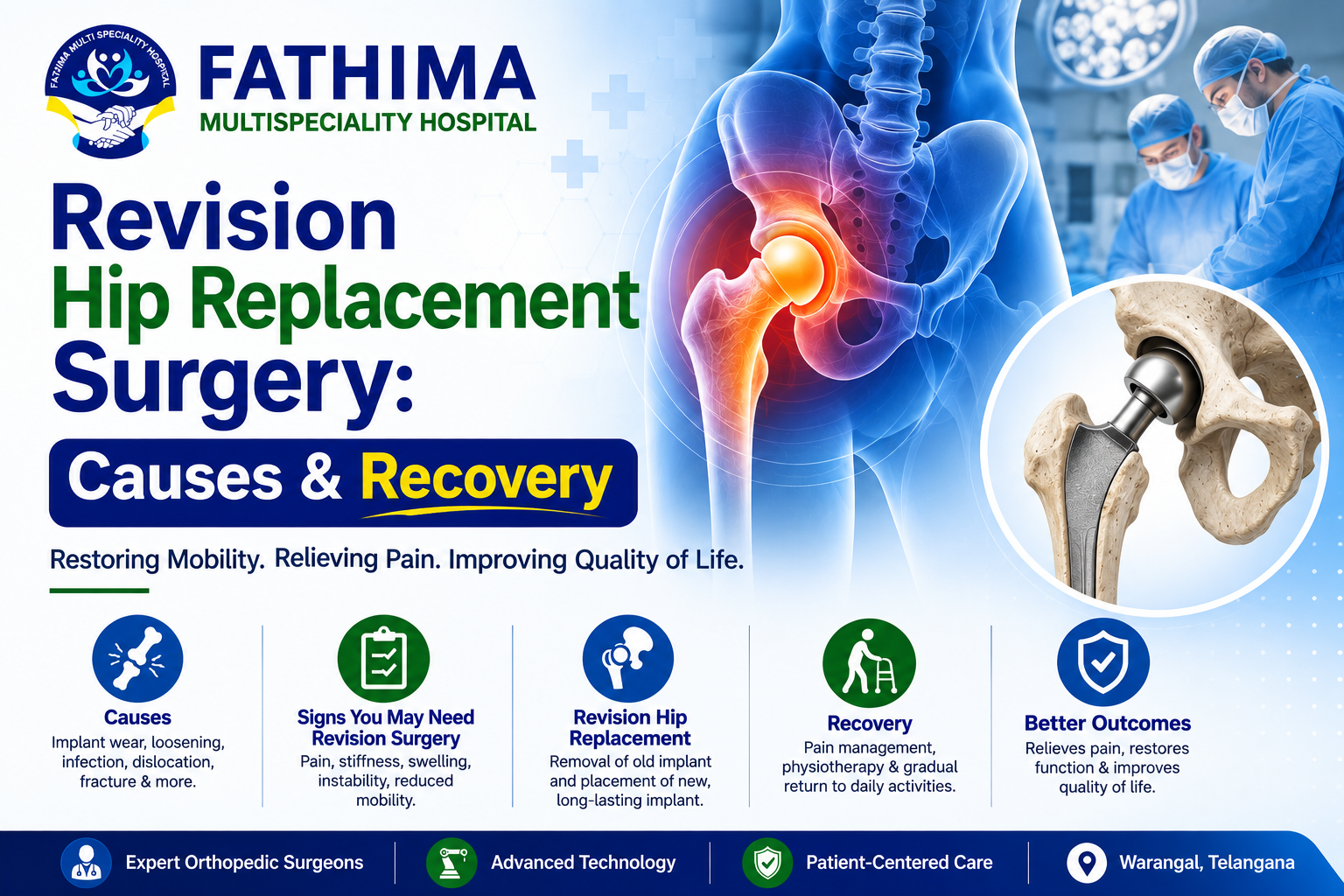
Revision Hip Replacement Surgery: Causes & Recovery

Knee pain that interferes with walking, climbing stairs, or sleeping at night is not something you should have to live with. If your doctor has suggested knee replacement surgery, you may have come across the term “robotic knee replacement” and wondered what it means, whether it is significantly better than conventional surgery, and whether the cost is justified. This article answers all of those questions in plain language, based on clinical evidence and the experience of our surgical team in Warangal.
Yes — robotic knee replacement is worth it for most patients with severe knee arthritis or advanced joint damage. Studies show it delivers more precise implant positioning, less post-operative pain, and faster return to daily activities compared to traditional surgery. The higher cost is offset by better long-term implant durability and fewer revision surgeries. However, the surgeon’s experience matters as much as the technology itself.
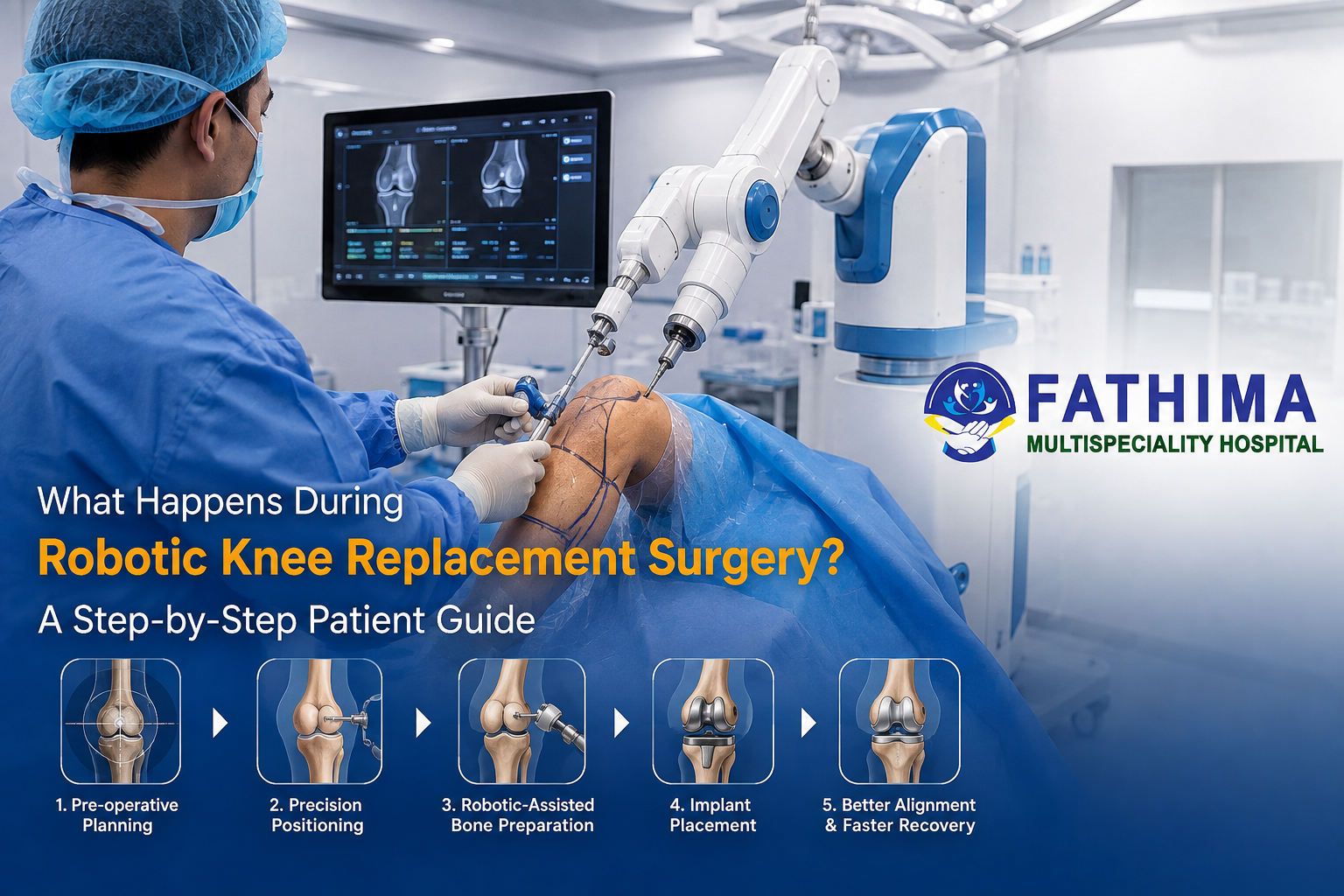
Robotic-assisted knee replacement is a surgical procedure in which a robotic guidance system assists the surgeon in removing damaged bone and cartilage and positioning the artificial knee implant with extreme accuracy. The robot does not perform the surgery independently — the orthopaedic surgeon remains in full control at every step. The robotic system acts as a highly sophisticated navigation tool, using a three-dimensional pre-operative plan of your unique knee anatomy to guide the surgeon’s instruments in real time.
Before surgery, a CT scan of your knee is used to create a personalised 3D model. The surgeon plans the exact angle, depth, and position of the implant on this model before entering the operating theatre. During the procedure, if the surgeon’s instrument deviates even slightly from the planned path, the robotic system alerts them immediately and can restrict movement outside the safe zone. This level of control is simply not possible with conventional manual surgery.
0.5mm: Precision accuracy vs 2–3mm traditional
40%: Less post-op pain reported by patients
3–4 days: Average hospital stay
20+ yrs: Expected implant lifespan with correct alignment
The advantages of robotic-assisted surgery over conventional knee replacement are well documented in peer-reviewed orthopaedic literature. Here is what the evidence — and our own surgical outcomes at Fathima Hospital in Warangal — consistently shows:
Sub-millimetre precision
The robotic system guides bone cuts to within 0.5mm of the surgical plan. Traditional manual surgery typically has a margin of 2–3mm. In joint replacement, even small errors in positioning accumulate over years to cause early wear, pain, or implant failure.
Better implant alignment
A correctly aligned implant distributes weight evenly across the joint, mimicking a natural knee. Misaligned implants cause uneven stress, leading to faster wear on one side. Robotic systems achieve optimal alignment consistently, regardless of the patient’s anatomy.
Faster recovery
Because the robotic system limits unnecessary bone and soft tissue damage, post-operative pain is significantly reduced. Most patients at Fathima Hospital are walking with support within 24 hours and leave the hospital in 3–4 days, compared to 5–7 days with traditional surgery.
Longer implant life
Correct positioning dramatically extends the functional life of the implant. A well-aligned robotic knee replacement can last 20 years or more. This is particularly important for patients under 65 who are more likely to outlive a traditionally placed implant.
Personalised to your anatomy
Every patient’s knee is different. The robotic system accounts for individual bone shape, leg alignment, and soft tissue tension. There is no one-size-fits-all approach — the surgical plan is unique to each patient.
Reduced revision risk
Revision surgery — a second operation to replace a failed implant — is complex, expensive, and harder to recover from. Better initial alignment reduces the likelihood of ever needing a revision, saving the patient significant cost and risk over a lifetime.
No surgical procedure is without risk, and robotic knee replacement is no exception. At Fathima Multispeciality Hospital, we believe in giving our patients a complete picture before any decision is made. Here are the genuine limitations to be aware of:
Risks and limitations
The most important factor in any surgical outcome is not the technology alone — it is the experience and judgement of the surgeon using that technology. Robotic systems enhance surgical precision; they do not replace the clinical expertise required to make the right decisions before, during, and after the procedure.
Feature | Robotic surgery | Traditional surgery |
Precision | Within 0.5mm | Within 2–3mm |
Pre-op planning | 3D CT-based personalised plan | X-ray and manual measurement |
Soft tissue damage | Minimal — robotic zone control | Moderate — manual cuts |
Hospital stay | 3–4 days | 5–7 days |
Recovery to daily activity | 4–6 weeks | 6–8 weeks |
Implant alignment consistency | Very high | Depends on surgeon |
Expected implant life | 20+ years | 15–20 years |
Cost in India | Higher (₹3.5–5 Lakhs) | Lower (₹1.5–3 Lakhs) |
Revision surgery risk | Lower | Moderate |
The cost of robotic knee replacement in India typically ranges between ₹3.5 Lakhs and ₹5 Lakhs per knee, depending on the hospital, the implant brand and grade used, and the surgeon’s experience. At Fathima Multispeciality Hospital in Warangal, we have made robotic knee surgery accessible to patients across Telangana by bringing this metro-level technology directly to the region, eliminating the need to travel to Hyderabad or Bengaluru.
₹3.5 – ₹5 Lakhsper knee · at Fathima Hospital, Warangal
Cost varies based on:
Implant brand and grade
Single vs bilateral (both knees)
Ward type (general / semi-private / private)
Duration of hospital stay
Physiotherapy sessions included
While traditional knee replacement costs less upfront, the long-term economics often favour robotic surgery. A revision surgery — if needed due to implant misalignment from a conventional procedure — can cost as much as the original robotic surgery itself, in addition to the patient’s pain, recovery time, and lost productivity.
Good candidates
May not need it
One of the most common questions patients ask us is: how long will it take to get back to normal life? Based on outcomes at Fathima Multispeciality Hospital in Hanamkonda, Warangal, here is a realistic timeline for robotic knee replacement recovery:
Day 1
Standing and walking with supportPhysiotherapy begins within 24 hours. Patients stand with assistance and perform basic ankle and knee exercises to prevent blood clots.
Days 3–4
Discharged from hospitalMost patients are cleared to go home with a walker or cane. Pain is managed with oral medication. Wound dressing is changed before discharge.
Week 2–3
Significantly reduced pain and swellingWalking distance increases daily. Physiotherapy sessions continue. Stairs become possible with support. Driving is not yet recommended.
Week 4–6
Resuming daily activitiesMost patients can manage household tasks independently, walk without a stick, and attend outpatient physiotherapy. Light work resumes for desk-job patients.
3 Months
Near-complete recovery90% of patients report returning to their normal daily routine. Swelling has subsided. The knee feels stable and natural. Follow-up X-ray confirms implant position.
6–12 Months
Full recovery and long-term functionFull muscle strength around the joint is restored. Patients can walk long distances, travel, and enjoy an active lifestyle — free from the chronic pain that brought them to surgery.
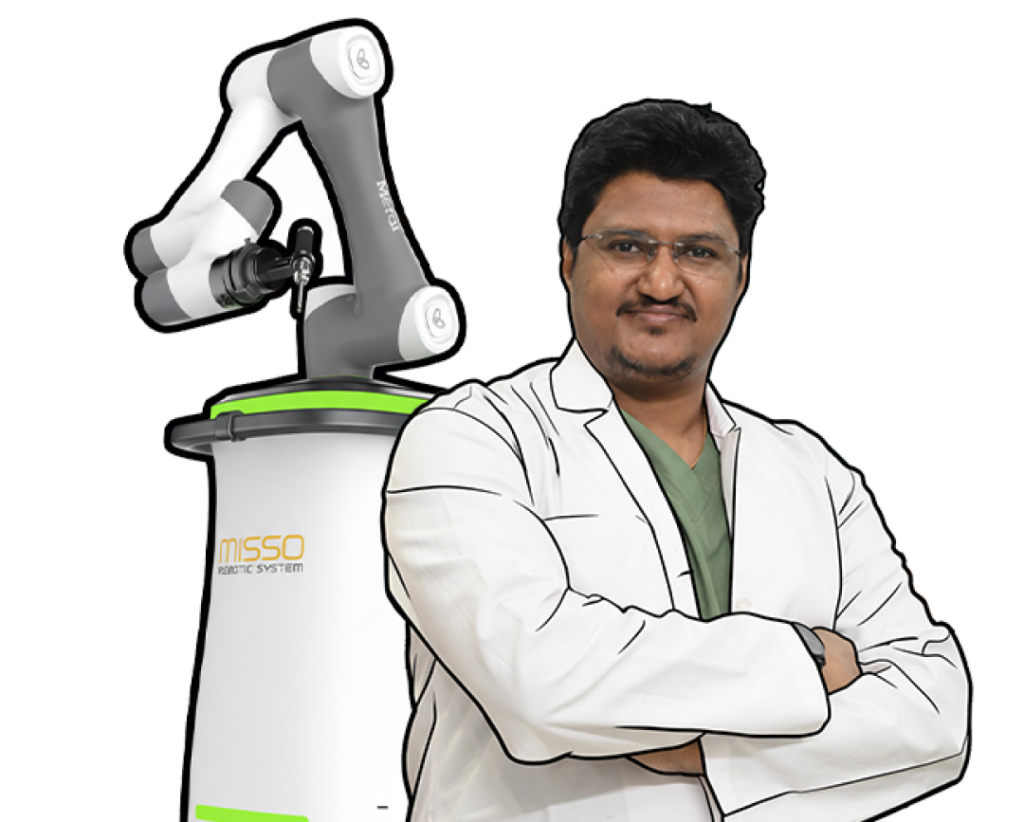
Consultations with Dr. Sukesh Reddy P are available Monday to Saturday at Fathima Multispeciality Hospital, Warangal.
📍 H No 1-1-1106, Beside Over Bridge, Sidharthnagar, Street No 7, Hanamkonda, Telangana – 506004
📞 +91 94947 32200
1Q: Is robotic knee replacement surgery painful?
Ans: The surgery is performed under spinal or general anaesthesia, so you feel nothing during the procedure. Post-operative pain is typically less than with traditional surgery because the robotic system causes less damage to surrounding soft tissue. Most patients find their pain well-controlled with oral medication within the first week, and considerably improved within two to three weeks.

MS Orthopaedics · Robotic Surgeon
H No 1-1-1106, Beside Over Bridge Sidharthnagar, Street No 7, Hanamkonda, Telangana - 506004